
dressed to belong: fashion and The system we inhabit
Fashion is not just about what we wear; it’s about how we see ourselves and how we want to be seen. Clothing, in its most visceral sense, functions as a uniform of identity, one that speaks a silent but powerful language about who we are, who we aspire to be, and which tribe we wish to belong to. But this desire to belong, to identify with a group, is not as simple as finding a style we like—it is often a deeper psychological drive that governs our choices. And in many cases, this craving for social acceptance can lead to decisions that go far beyond simple wardrobe updates. Having explored in our last article how social codes are biologically and evolutionarily embedded, fashion emerges as one of their most visible contemporary expressions. Yet beneath the surface lies a deeper psychological and social architecture. Clothing does not merely cover the body - obviously - it communicates identity, mediates belonging, and signals status. What individuals choose to wear becomes part of a broader symbolic system through which they are perceived, categorized, and valued. Fashion operates as a social language - one that shapes self-concept, aspiration, and behavior.
At its most visible level, fashion appears to be about personal expression. Individuals select garments that align with taste, mood, lifestyle, or cultural reference. However, personal choice rarely unfolds in a vacuum. Preferences are influenced by social norms, economic structures, media imagery, peer groups, and deeply embedded cultural narratives. As previously observed, such mechanisms are not merely cultural constructs but are rooted in biological and evolutionary frameworks that describe human sensitivity to social signalling, affiliation, and hierarchical differentiation. The act of dressing therefore becomes inseparable from the act of positioning oneself within a social landscape. To wear is to declare - not always consciously - affiliation, distinction, aspiration, or resistance. In contemporary society, these signalling functions remain deeply tied to survival, though the stakes have shifted from physical security to social, economic, and psychological forms of existence. Garments mediate identity, legitimacy, and visibility, translating evolutionarily ingrained drives into contemporary symbolic economies.
Nowhere is this interplay between singling, perception, and value more visible than in the domain of luxury. Take a moment to consider the power of the most recognizable luxury brands: Dior, Patek Phillipe, Chanel. These names are not just symbols of material wealth; they represent access to a world, a club, a specific class of individuals. High-end brands are not simply producers of goods; they are creators of symbolic worlds structured around narratives of refinement, exclusivity, heritage, and success. A luxury handbag, watch, or coat carries meanings that extend far beyond utility or craftsmanship. These objects function as condensed social signals, encoding messages about taste, status, access, and cultural fluency. They imply entry into a perceived realm of prestige and recognition. The objects primary value resides in the symbolic and relational meanings it activates. The yearning to be associated with these symbols, to claim them as part of one’s identity, can become so consuming that the pursuit of the right look eclipses all other considerations—financial, emotional, and even practical.
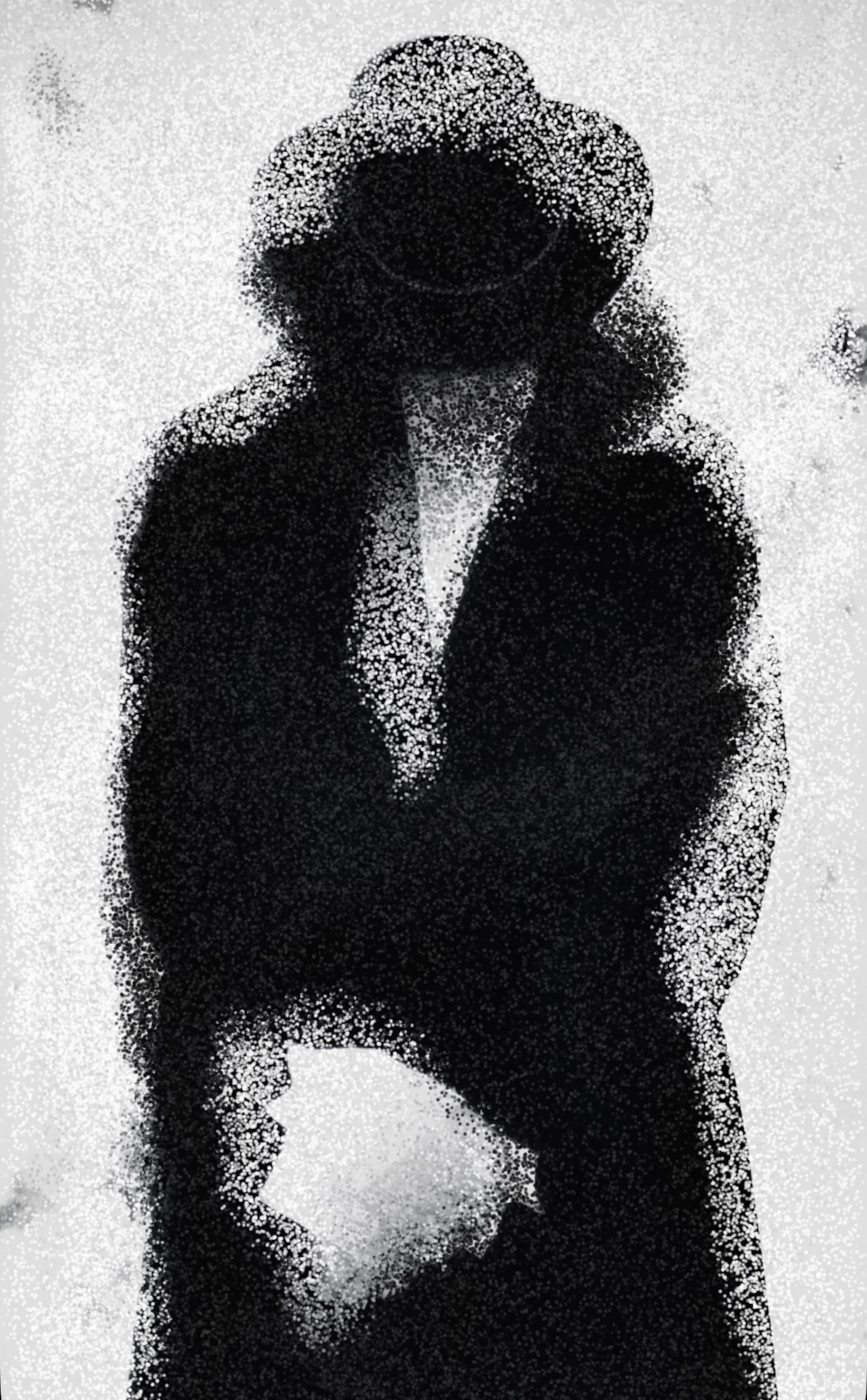
The human need to belong is one of the most powerful drives in our psychology (© Edie Lou)
The Deep Need to Belong
At its core, the human need to belong is one of the most powerful drives in our psychology. Social acceptance is fundamental to our survival and well-being, both historically and in contemporary times. We are inherently social creatures, shaped by millennia of evolution that rewarded those who could integrate with their social groups. In a world where group dynamics often determine status, resources, and emotional security, the instinct to be accepted into a desirable group runs deep. But belonging isn’t just about proximity to others - it’s about being recognized and validated by the group. And the most direct way to achieve that recognition in contemporary society is often through the physical symbols that denote membership. In the past, this might have been through kinship, shared values and resources, or occupation. Today, these symbols are often material: a branded handbag, a luxury car, a designer watch. These objects signal that you have “arrived,” that you belong to the aspirational class. They communicate success, sophistication, and a level of status that is universally recognized.
But hwy? Well, the psychological need to belong is fundamental. Social acceptance contributes to emotional stability, self-esteem, and a sense of security. Rejection, by contrast, activates stress responses and threatens identity coherence. Such reactions are not merely cultural artefacts but reflect deeply embedded regulatory mechanisms. To be socially legible - to feel appropriately situated within a given environment - stabilizes self-perception. To feel illegible or out of place can unsettle it. As Baumeister and Leary famously argued, the need to belong constitutes a basic human motivation, shaping cognition, emotion, and behavior across contexts. Human cognition is finely attuned to signals of acceptance and exclusion; attention, evaluation, and interpretation are continuously shaped by the question of relational standing. Social situations are rarely processed as neutral. They are filtered through an implicit assessment of whether one is recognized, validated, and securely positioned within a network of others. This motivational structure exerts a profound influence on emotional life.
Behavior, consequently, becomes oriented toward the maintenance and repair of belonging. Individuals adjust speech, posture, preferences, and appearance in response to contextual expectations. Dress, within this dynamic, functions as an especially visible and immediate medium of negotiation. Clothing allows individuals to anticipate perception, to align with or distance themselves from particular groups, and to manage the risks associated with social evaluation. What may appear as aesthetic choice often participates in a more fundamental process: the ongoing calibration of one’s position within symbolic and relation structures - the continuous adjustment of one’s social position and legibility.. Dress helps the wearer to signal who they align with, how they wish to be perceived, and how they manage social judgement. In our society, these symbols are so powerful that we begin to internalize them as measures of self-worth. And once we internalize this idea, the quest for belonging through material means takes on a new level of urgency. We no longer seek just a brand; we seek validation. The Chanel monogram on our arm is not just an accessory; it is a key to the door of acceptance. The acquisition of certain garments or brands is experienced as a stabilizing act - an attempt to secure legitimacy, recognition, or protection against perceived social insufficiency. Within this dynamic, consumption becomes entangled with identity regulation. To purchase is to negotiate visibility; to wear is to manage perception. The symbolic value of clothing expands precisely because it promises resolution: the possibility of appearing successful, refined, or aligned. Yet the satisfaction derived from such signals often remains fragile. Belonging cannot be permanently secured through objects, the cycle renews itself, production continuous recalibration - new desires, new standards…and new anxieties. Fashion - in this case - functions as an ongoing arena in which self-worth and social acceptance are continuously negotiated.

Fashion functions only because observers are equipped to decode its markers (© Edie Lou)
Status Signaling: The Social Currency of Fashion
Fashion, at its most sophisticated level, is not just about personal style or practicality; it’s about status signaling. Sociologists have long understood that certain goods are not bought for their utility alone but for what they signify in the larger social structure. Pierre Bourdieu, in his theory of cultural capital, outlined how individuals use symbols -whether through education, language, or fashion - to gain access to particular social spaces. Luxury items are prime examples of this signaling function. Goods are very rarely valued purely for functionality; they derive significance from what they symbolize within social structures. To describe fashion as a system through which social distinctions are encoded, perceived, and reproduced is to shift the focus from garments to structure. Clothing does not acquire meaning in isolation, obviously, it becomes legible within a shared social field governed by implicit codes. Cuts, fabrics, brands, and styling choices function as signifiers whose interpretation depends on collectively learned frameworks of value. What appears as aesthetic preference is inseparable from classification. Dress locates the individual within matrices of taste, status, and cultural competence, often with remarkable efficiency. The garment operates as a condensed social text, communicating signals about refinement, resources, restraint, excess, literacy, or aspiration before speech intervenes.
This signalling process gains force through perception. Fashion functions only because observers are equipped - consciously or not - to decode its markers. Recognition of a silhouette, a label, or a mode of styling activates associations shaped by class structures, media circulation, and cultural conditioning. In this sense, clothing participates in a reciprocal economy of meaning: individuals select garments within systems of expectation, while audiences interpret those selections through historically sedimented hierarchies of taste. The act of dressing therefore becomes dialogical - embedded in networks of evaluation, comparison, and symbolic positioning. Crucially, fashion does not merely reflect social differentiation; it actively stabilizes and renews it. Distinction requires visibiltiy, and visibility requires contrast. As styles associated with privilege diffuse through imitation or market expansion, elite codes recalibrate, generating new form of differentiation. What was once exclusive becomes commonplace; what was once subtle becomes amplified or abandoned. Through this continuous movement, hierarchy is not dissolved but reorganized. Fashion becomes a dynamic mechanism of social reproduction, sustaining difference through cycles of adoption, adaption, and displacement. Within this structure, individuals navigate more than taste - they negotiate legibility. Dress mediates the tension between belonging and differentiation, conformity and singularity, recognition and autonomy. The pressure to appear appropriate, refined, current, or distinct reflects not superficial concern but participation in a symbolic system where visiblility carries consequences. Clothing, far from being trivial style or decoration, becomes an instrument through which social reality is both expressed and enacted. And why is it like this? As our previous article has shown, these dynamics are rooted in evolution and biology. Humans evolved in environments where social rank and group belonging directly affected survival. As a result, the brain developed strong sensitivity to relative positioning and visible status cues. Contemporary symbolic systems - including fashion - activate these deeply embedded mechanisms, even when material survival is no longer at stake.
Although such signals may no longer determine immediate physical safety, they remain closely tied to social and economic forms of survival: access to employment, housing, networks, credibility, and inclusion. To appear “appropriate”, “competent”, or “aligned” continues to shape opportunity structures, affiliation within subcultures and social groups. And because the perceived stakes are high, individuals may assign disproportionate importance to appearance and the symbols associated with it. In a world where social mobility can be more difficult than it might seem, the desire to signal one’s place in the hierarchy of society can drive people to make irrational choices. Fashion and material goods become shorthand for more complex desires: to be seen as successful, to be valued, to be part of an elite world. It is not uncommon to see people who feel disconnected from high-status social circles go to extraordinary lengths to bridge that gap. This often results in the overspending on luxury goods or designer items that, to the untrained eye, may appear superficial but are, in fact, highly calculated investments in social currency. The key here is that these items hold a value that goes beyond their physical characteristics. A Louis Vuitton bag is not just about carrying things; it is about what that bag says about the person carrying it. For those outside certain circles, these items are the passport to recognition, to acceptance. This is why some are willing to spend beyond their means or enter into debt for the sake of owning these pieces. The logic is simple: owning these objects elevates their status, positions them closer to the lifestyle they desire, and opens doors to new social realities. Because the perceived stakes are high, individuals may assigns disproportionate importance to appearance and the symbols associated with it. Decisions that seem excessive or economically imprudent from an external perspective often reflect attempts to minimize social risk, secure legitimacy, or avoid exclusion. Consumption, in this context, becomes less a matter of preference than of perceived necessity.

Evolution shaped human sensitivity to status, prestige, and signals of resource access (© Edie Lou)
The Control of Dress
But why do people sacrifice so much - sometimes even their financial stability - to gain this validation? The answer lies in the nature of our identity formation. Our self-concept is not solely built on internal factors; it is also constructed through external recognition. What we wear, the brands we associate with, the objects we surround ourselves with, all contribute to how we are seen by others. In a world where social status is often linked to material wealth and brand affiliation, the anxiety about not measuring up can become overwhelming. For some, the solution is simple: acquire the status symbols that suggest success, wealth, or taste, and hope that they will fill the void within. The problem, however, lies in the paradox. When we place so much of our sense of self-worth in the external validation of others, we are caught in an endless cycle of consumption. With every new purchase, we may experience a fleeting moment of satisfaction, but it is quickly replaced by the hunger for more. Fashion, with its seasonal cycles, its new trends, and ever-evolving definitions of “success,” constantly reinforces this cycle. The need to belong becomes so ingrained that it turns into a form of social addiction. Each acquisition feeds the desire for the next one, leading individuals down a path where financial and emotional stability are sacrificed in the name of social validation.
Humans are, fundamentally, social beings. The need to belong, to be recognized, and to feel securely positioned within a group is not superficial - it is a fundamental condition of human existence. The desire for social connection, recognition, and secure inclusion within a group is not simply a cultural artefact or a product of contemporary society. It is rooted in the evolutionary history of a species whose survival depended on cooperation. As we know by now, for early humans, belonging was inseparable from protection, resource access, and reproductive opportunity. Exclusion could endanger survival itself. Over time, these pressures became biologically and psychologically inscribed. Human cognition developed a hieghtened sensitivity to cues of acceptance and rejection, while emotional systems became closely tied to experiences of social validation or exclusion. The need to feel recognized, acknowledged, and appropriately situated within a social environment persists as a deeply embedded regulatory mechanism. Even in contemporary societies, where physical survival is rarely contingent on immediate group acceptance, the underlying system remains active. Belonging continues to shape perception, emotion, and behavior as an enduring feature of how humans navigate social reality.
The translation of these deeply embedded social drives into the domain of luxury is not accidental. Evolution shaped human sensitivity to status, prestige, and signals of resource access, while contemporary consumer culture supplied new symbolic vehicles through which such distinctions could be displayed. Luxury goods function as contemporary status markers precisely because they operate as visible, costly signals, legible within shared cultural frameworks. Their power lies in their capacity to communicate position, taste, and perceived legitimacy - the power of the object is what it socially signifies. Within this symbolic framework, the desire to associate with elite groups reflects a continuity grounded in the historical relationship between status and advantage. In earlier social structures, higher rank frequently provided increased security, access to resources, influence, and opportunity. Under such conditions, orientation toward elevated status positions was an adaptive response to environments in which hierarchy shaped survival and life chances. The psychological mechanisms underlying sensitivity to prestige and social positioning therefore emerged within contexts where status carried tangible consequences. Although exclusion may no longer carry the same direct life-or-death consequences as in early human environments, social and economic hierarchies continue to shape access to resources, stability, and security - access to employment, income, and housing, let’s say basic security, continues to be structured by social positioning.
Fashion’s symbolic force is inseparable from power. Distinctions of taste, refinement, and legitimacy do not emerge neutrally but are structured by relations of dominance and recognition. As Pierre Bourdieu observed, aesthetic preferences operate as instruments of symbolic power, through which social hierarchies are naturalized and reproduced. What appears as individual taste frequently reflects historically sedimented structures that privilege certain forms of appearance while marginalizing others. If Bourdieu’s analysis reveals how taste and distinction operate as mechanisms of symbolic power, Michel Foucault’s work deepens this understanding by examining how such power becomes internalised within everyday practices. For Foucault, power is not confined to visible structures of authority, laws, or explicit prohibitions. It functions more diffusely through processes of normalization, whereby societies establish implicit standards of what is considered appropriate, desirable, and acceptable. These norms do not require constant external enforcement; they are gradually absorbed, shaping how individuals perceive themselves and regulate their own behavior. Within regimes of normalization, individuals learn to monitor, evaluate, and adjust their conduct in anticipation of social judgment. Surveillance, in this sense, becomes partially self-administered. The subject observes and disciplines itself, aligning presentation with pervasive yet often unwritten expectations. Appearance - including clothing - emerges as a particularly visible site of this self-regulatory activity. Dress becomes intertwined with the management of legitimacy, credibility, and belonging. Foucault’s notion of disciplinary power further clarifies this dynamic. Rather than operating primarily through overt coercion, disciplinary mechanisms function through continuous observation, comparison, and subtle correction. We are shaped to conform not only through constraint but through the internalization of norms that define competence, refinement, and social intelligibility. Clothing participates directly in the process, mediating how individuals are rendered legible within professional, social, and cultural contexts.

Conclusion: We all play the game
In the end, the need to belong is natural; it is a fundamental human drive. The desire for recognition, legitimacy, and secure inclusion does not arise from superficial preference but from deeply embedded psychological and evolutionary structures. Across contexts, individuals remain sensitive to how they are perceived, evaluated, and situated within social environments. Clothing participates in this process not as a trivial embellishment, but as one of the most immediate and visible mediums through which belonging and distinction are negotiated. These dynamics persist irrespective of education or intellectual sophistication. One may understand these mechanisms intellectually, yet remain subject to the same structure of perception and interpretation. Awareness explains the system; it does not switch it off. Especially in highly educated environments, fashion is frequently framed as trivial or shallow - positioned in contrast to domains associated with intellect, rigorous, or seriousness. To declare indifference toward fashion often functions as a marker of cultural identity, signalling distance from what is perceived as superficiality or excessive concern with appearance. Yet such distancing des not suspend participation in symbolic systems of dress and consumption - obviously!. The professor who rejects fashion as shallow may nonetheless select a Rolex; the architect who dismisses status signalling may prefer a Tesla; the engineer who claims neutrality may adopt equally coded forms of distinction - functionally coded garments from Patagonia. These choices are rarely experienced as engagement with fashion or status, but formed within social environments, shaped by processes of cultural exposure, professional norms, and peer-group influence. Our sense of what looks appropriate, credible, or desirable reflect standards we have absorbed and not consciously chosen. The claim of non-participation becomes another way of participation. The shift is from one symbolic vocabulary to another. The aesthetic vocabulary one adopts is inseparable from the relational contexts in which it becomes meaningful.
What emerges is the persistence of social signaling across different cultural narratives. Even the rejection of fashion becomes legible within the same field of distinction. There is no position entirely outside these dynamics - only varying interpretations of what one believes oneself to be participating in. Individuals navigate structures that precede them, responding to pressures that are diffuse, relational, and often invisible precisely because they are experienced as self-directed choice. In line with Foucault’s analysis, such norms exert their force precisely through this process of internalization. The act of dressing remains embedded within economies of visibility and evaluation that shape opportunity, legitimacy, and belonging. There is no neutral position outside symbolic systems of perception. We are humans, and our lives unfold not apart from others, but through continuous encounters with their presence, their interpretations, and their gaze. Human beings come to understand themselves through recognition, interaction, and shared systems of meaning. To exist socially is to be perceived, interpreted, and situated within frameworks that shape legitimacy, belonging, and difference. These dynamics are conditions of human life. Under the gaze of the Other individuals become aware of themselves as both subject and object - perceiving how they appear, how they may be judged, how they are positioned within shared worlds of meaning.
In this sense, appearance acquires existential significance. The self is never formed in isolation but emerges within fields of mutual perception. To exist socially is to be visible, interpretable, and exposed to evaluation. Clothing, therefore, participates in more than aesthetic choice or cultural convention. It becomes one of the mediums through which individuals negotiate their being-for-others - managing how they are read, recognized, and understood within relational environments. Seen from this perspective, participation in symbolic systems of dress reflects an existential condition. The desire to appear coherent, legitimate, or aligned emerges not from superficiality but from the relational nature of existence itself. But, what becomes significant, however, is how consciously these dynamics are inhabited. Reflection allows for the development of a more discerning relationship to the codes and hierarchies embedded within appearance. Such awareness can often the impulse to reduce oneself or others to visible markers of status, resisting the tendency to transform dress into a rigid instrument of judgment, exclusion, or hierarchical valuation. It may also recalibrate the pressures surrounding consumption. When clothing becomes overly burdened with the promise of belonging or legitimacy, expenditure risks exceeding both material necessity and psychological proportion. Realizing that no object can permanently secure validation creates a healthier distance between desire and expectation. Purchases may still bring pleasure but they no longer carry the burden of resolving deeper insecurities. Awareness of the limits of material symbols tempers the impulse to pursue validation through repeated consumption.
Finally, reflection tempers the pursuit of idealized identities. The images associated with wealth, prestige, or cultural belonging often function less as attainable destinations than as projections shaped by collective imagination. This does not negate the possibility of success or recognition, but it distinguished lived trajectories from fantasies that derive their power precisely from their distance. What is chased is frequentlyy not a concrete reality, but an idolized construct onto which desires for security, admiration, or completion are displaced. Awareness, in this sense, does not demand withdrawal from aspiration or participation. It invites a clearer perception of what garments, objects, and symbols can meaningfully offer - and what they cannot. Such reflection may gradually reorient attention toward qualities that are more stabilizing. Resilience, inner stability, and coherent sense of self cannot be purchased. They are capacities shaped over time. They emerge through lived experience, self-reflection, and the ongoing work of identity formation. Objects may accompany this process, but they cannot replace it. No garment or symbol can perform the developmental labor through which individuals cultivate continuity, self-trust, and inner steadiness. When we cultivate a more grounded relationship to ourselves - well-being as a condition shaped by continuity of self-perception - the symbolic pressures attached to consumption may become less compelling. Objects continue to operate within symbolic economies of visibility and meaning, but the individual’s relation to these systems acquires greater steadiness. Satisfaction becomes less dependent on alignment with circulating images and more anchored in continuity of self-perception across contexts. It is not about rejecting the social world, but regain our own narratives. Clothing, like all symbolic forms, remains part of this negotiation. Yet when reflection stabilises the relation between appearance and self-perception, dress no longer functions solely as a response to external validation. It becomes integrated into a more deliberate authorship of one’s presence. One does not escape the structures of perception. One may, however, come to inhabit them with a clearer sense of orientation - less driven by compulsion more anchored in an owned narrative of selfhood. Nevertheless, fashion should be a tool for self-expression, not a cage for our identity. It should reflect our individuality and our place in the world—without the need to sacrifice our financial or emotional well-being for the sake of fleeting validation.
https://www.goodreads.com/book/show/24851764-the-forms-of-capital
https://foucault.info/documents/foucault.technologiesOfSelf.en/
https://www.goodreads.com/book/show/164019.The_Theory_of_the_Leisure_Class
https://www.sup.org/books/theory-and-philosophy/transparency-society
https://www.taylorfrancis.com/chapters/edit/10.4324/9781315099620-11/fashion-georg-simmel
https://monoskop.org/images/1/19/Goffman_Erving_The_Presentation_of_Self_in_Everyday_Life.pdf
https://searchworks.stanford.edu/view/8388804
https://www.penguin.co.uk/books/56314/thinking-fast-and-slow-by-kahneman-daniel/9780141033570
https://digitalcommons.rockefeller.edu/jason-brown-library/50/
https://ora.ox.ac.uk/objects/uuid:c94f5071-7fe6-43e1-be44-6739449c2665/files/rj9602188z
https://www.hup.harvard.edu/file/feeds/PDF/9780674006133_sample.pdf
https://www.goodreads.com/book/show/61535.The_Selfish_Gene
https://www.goodreads.com/book/show/1348952.Social_Evolution
https://www.goodreads.com/book/show/780672.The_Emotional_Brain
https://stevenpinker.com/publications/how-mind-works-19972009
https://press.uchicago.edu/ucp/books/book/chicago/F/bo3777018.html
https://archive.org/details/uniformsexposedf0000crai_f2y6
https://www.goodreads.com/book/show/4124844-the-idea-of-luxury
https://msbfile03.usc.edu/digitalmeasures/jnunes/intellcont/Brand%20Prominence%201-12-10-1.pdf
https://archive.org/details/cultureconsumpti0000mccr_o7u4