fashion: What it communicates and when it becomes art
Fashion is a word that shapeshifts. One moment it names a trillion-dollar industry humming with logistics and quarterly forecasts; the next it is praised as museum-grade artistry; a beat later it dissolves into the ephemera of whatever TikTok is wearing this week. The very elasticity that keeps the term alive also blurs its edges. The word fashion is used by very different groups of people but each group often means something completely different when they say it. Because they share the same word yet hold distinct definitions, they can end up debating “fashion” while actually talking past one another. The word “fashion” can denote an industrial supply chain, a seasonal trend, or a museum-level art form.
So, this time, the focus shifts to fashion as a system of meaning - and to the conditions under which it can be understood as art rather than mere clothing. What differentiates functional dress from fashion, and under what conditions does fashion operate as an artistic practice rather than a commercial one? Fashion operates as a language. Garments do not just cover the body, obviously, they communicate meaning. Silhouettes, materials, proportions, and colors carry references from a system of signs through which identities, cultural positions, and historical moments become visible. In this sense, fashion is inherently semiotic: it translates abstract ideas into visual form. But here emerges a question: under what conditions does clothing - born of utility - cross the threshold into fashion, and when does fashion itself qualify as art? By tracing how value moves from fabric to symbol, we can clarify what distinguishes a functional object from an aesthetic statement and what elevates certain collections to the status of art practice.
What pushes a garment past simple utility and lets it stand beside painting or sculpture? Before we trace that journey, we need a working sense of what counts as art at all. Fashion slips easily from commerce to culture, from retail floor to museum plinth, yet the hinge that swings a garment into the realm of art is rarely inspected. Art, in its contemporary sense, presumes an object whose form speaks before function, where meanings accrue in layered ways, and whose staging invites crucial, not merely consumerist, attention. Fashion, as we said, is already a language: silhouette, fabric, color, and citation operate as signifiers that broadcast ideas about authority, dissent, refinement, or belonging. The question is not whether clothes can communicate - clearly they do - but when that communication gains the conceptual density and cultural framing we reserve for artworks. Like a painting or sculpture, fashion can marshal line, volume, and texture to stage conceptual arguments. The runway, gallery installation, or editorial image then functions as a site of discourse rather than a showroom. Yet fashion’s artistic potential is not automatic. Most clothing remains within the orbit of utility and commerce. What differentiates a mass-produced jacket from a Comme des Garçons piece shown in a museum is intentionality, formal experimentation, and the capacity to generate sustained cultural interpretation. The writing that follows will map these thresholds - separating clothing, style, and fashion - and propose clear criteria for recognizing when fashion genuinely enters the realm of art. By the end, we’ll know exactly when cloth quits its day job as mere cover and steps onto the gallery floor as culture.
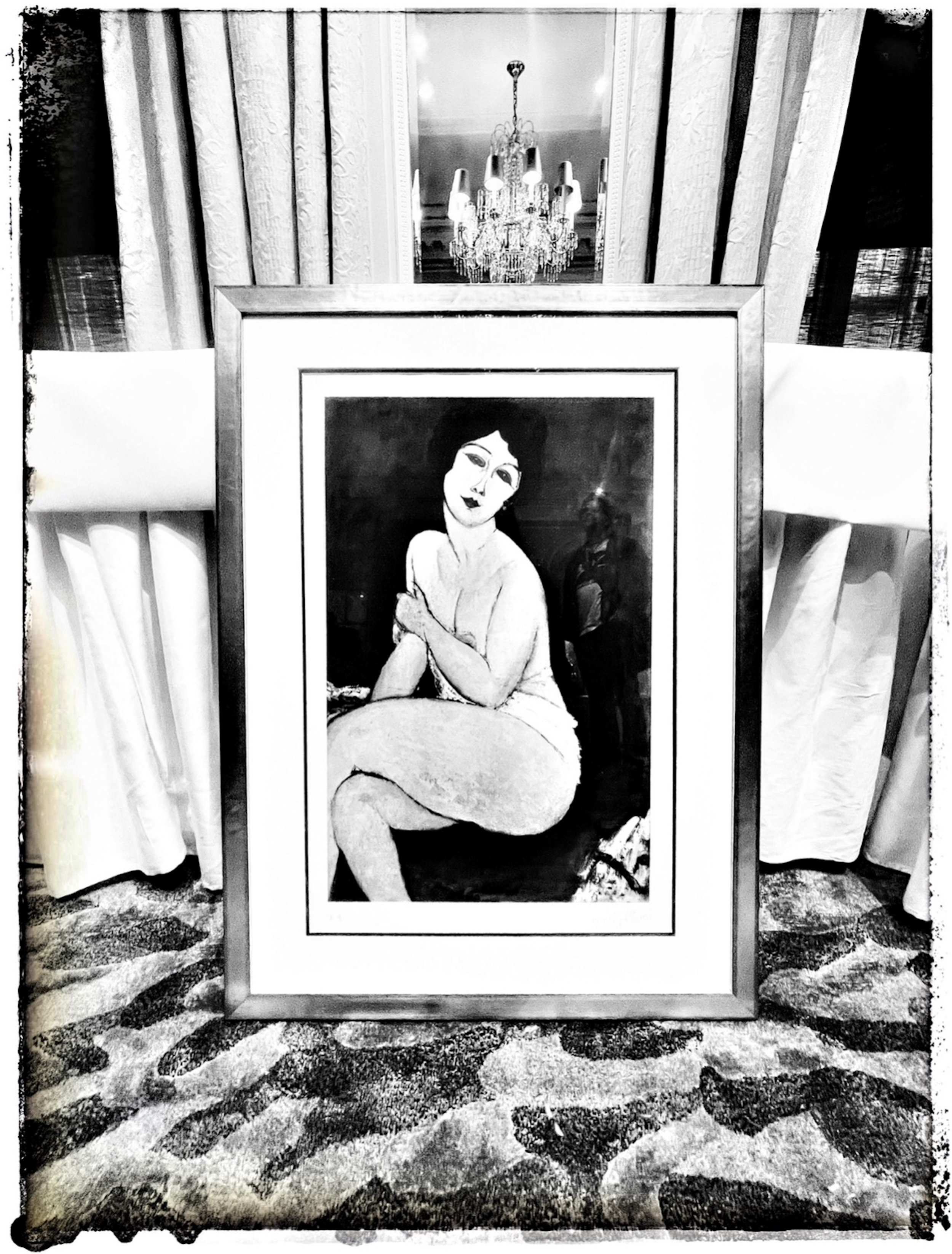
What is art (© Edie Lou)
What Even Is Art
So, what is art? The question of what constitutes art begins in Ancient Greek philosophy, where the term techne (Greek: τέχνη, pronounced tékhnē) referred broadly to skill, craft, and the knowledge of making. For Plato, art was understood with suspicion, as a form of imitation (mimesis) that reproduces appearances rather than truth. Art was, in this sense, twice removed from reality. For Plato, reality is structured in layers. At the highest level are the Forms (eidos): perfect, unchanging, abstract essences that exist independently of the material world. The Form of a chair, for example, is not a physical object, but the ideal concept of the “chariness” - the essence that makes all chairs recognizable as chairs. Every real chair is only an imperfect version of this ideal. Below this lies the world of appearances - what we see - the physical objects around us. They are imperfect, temporary, and variable. A chair can break, differ in shape, or simply decay. Each physical chair is only a partial and unstable realization of the ideal Form (eidos); it approximates the concept, but never fully embodies it. A third level emerges with art. A painting or image of a chair does not reproduce the form itself, but only the appearance of a physical chair. It is therefore a representation. In this sense, art is twice removed from the highest level of reality. It operates at the level if imitation, reproducing surface rather than accessing underlying essence.
Aristotle, by contrast, reframed mimesis as a productive and cognitive act. Representation was not merely copying, but a way of structuring and understanding the world, capable of generating insight and emotional recognition. Where Plato saw imitation as distancing us from truth, Aristotle argues that representation can actually bring us closer to understanding. An artwork does not simply reproduce what is seen; it reconstructs reality in a structured way. The artist chooses what to emphasize, omit, or transform, thereby revealing patterns, relationships, and meanings that may not be immediately visible in everyday experience. This is why Aristotle considers art cognitively valuable. A tragedy, for example does not just depict events - it organizes them into a coherent narrative that allows us to grasp universal aspects of human behavior: fear, ambition, loss, responsibility. Art in this case does not merely reproduce the visible world; it constructs intelligible versions of it. And at the same time, art produces emotional recognition. Aristotle introduces the concept of catharsis: the experience through which audiences engage with emotions such as pity and fear in a controlled and meaningful way. Art does not merely imitate emotion; it makes it intelligible and shareable, allowing individuals to recognize themselves in what is represented. Art becomes a way of thinking - one that operates through form, narrative, and perception rather than abstract reasoning alone.
For centuries, the Aristotelian understanding of art as a structured form of representation remained largely intact. Even as artistic media expanded and styles evolved over time, the underlying assumption persisted: art was something made through skill, composition, and perceptual engagement with the world. Whether mimetic or expressive, it remained anchored in the transformation of visible reality. This continuity is not overturned at once, but progressively destabilized through modern artistic experimentation. Yet, it is in the work of Marcel Duchamp within the context of Dada that the break between visible reality and artistic expression becomes fully explicit. Dada, a radical avant-garde movement that rejects traditional artistic criteria, attacked the idea itself that art has stable criteria at all. It emerged in the context of World War I, where the belief in reason, progress, and cultural refinement had collapsed. In response, Dada embraced irrationality, absurdity, and contradiction. It rejected beauty, skill, coherence, and meaning as necessary conditions for art. In doing so, it exposed that what had been considered “art” was not natural or fixed, but historically constructed. What Marcel Duchamp did within this context was to make this rupture concrete. With the readymades, Duchamp removes the necessity of transformation altogether. An object is not altered, improved, or reinterpreted through form. Instead, the act of designation replaces the act of making. What had previously defined art becomes irrelevant. In this sense, Duchamp does not expand the boundaries of art - he destabilizes them He demonstrates that the difference between an ordinary object and an artwork is not inherent in the object itself, but depends on how it is framed and understood.
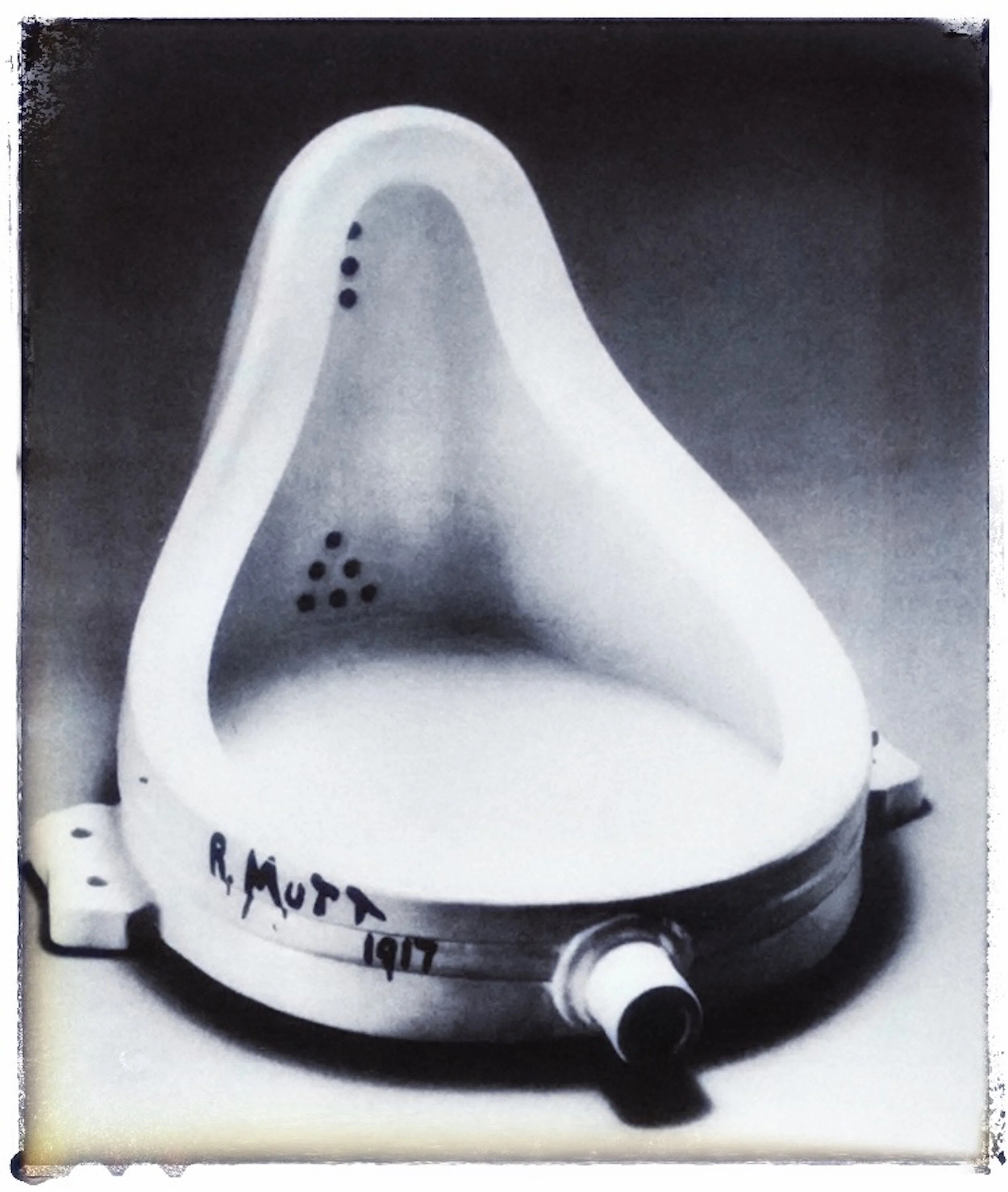
Marcel Duchamp “Fountain”, 1917 (Public domain, via Wikimedia Commons)
So, after Duchamp, art begins where the object is no longer defined by what it is, but by how it is positioned to be understood. Let’s visualize it. A chair. It is built to be sat on; it is defined by its function. Yet the same chair, placed within a conceptual installation, shifts from use to meaning. It is no longer encountered as an object of function, but as a proposition to be interpreted. So, we can say that art is the deliberate transformation of form into meaning beyond necessity. It emerges when an object, gesture, or composition is no longer governed by utility alone but is structured to be perceived, interpreted, and experienced. What defines art is not the medium - paint, sound, fabric, or any kind of object - but the shift in orientation: from function to expression, from use to significance. Art does not solve a problem; it opens one. It invites attention because it carries something that exceeds need. It is not created to fix something practical or fulfilling a direct function (like a chair, a coat, or a tool). Instead, it exists to make us think, feel, question, or notice something differently. This excess is crucial. Art introduces a layer of meaning that is not exhausted by immediate understanding. It sustains interpretation. It allows multiple readings, emotional responses, and conceptual engagements to coexist. Whether through formal composition, symbolic reference, or contextual displacement, art produces a density that resists reduction to a single function or explanation.
At the same time, art is not entirely autonomous. It exists within a cultural frame that recognizes and engages with it as such. An object becomes art not only through its internal structure, but through the way it is positioned, perceived, and discussed. Art is not simply what is made - it is what is made to be seen, questioned, and interpreted as more than what it materially is. The same physical object can exist in two entirely different registers depending on how it is framed and engaged. As a material thing, it occupies space, has weight, texture, and function. As art, it becomes a site of attention. Its presence is no longer exhausted by what it does, but expanded by what it suggests. This shift is not located in the object alone, but in the relation between object, context, and observer. To encounter something as art is to suspend immediate use and enter a different mode of perception - one that is slower, interpretative, and open-ended. Yet this does not mean that every object produced within an artistic medium automatically becomes art. A painting is not art by default, just as a musical performance or a garment is not inherently artistic simply because it belongs to a recognized form. Medium and technique provide the conditions of possibility, not the guarantee of artistic status. One can paint or design with technical precision and still remain within the realm of replication, decoration, or function. A cover band may execute a song flawlessly without producing anything conceptually new; a painting may reproduce an image without generating interpretation beyond its surface - unless the act of reproduction itself becomes the artwork, it can introduce a conceptual displacement that reactivates meaning.
Fashion as Signification
Now that the conditions under which something may be understood as art have been clarified, the question arises how fashion can be situated within this framework. Clothing is not inherently artistic, obviously. It can remain entirely within the domain of utility - protecting the body, regulating temperature, fulfilling practical and social requirements. It can also operate at the level of style, where choices express preference, taste, or affiliation. Yet style does not automatically constitute art; it can remain within established codes, but it can also exceed them. This becomes particularly evident in practices of drag queens, where garments, styling, and performance are deliberately constructed to produce meaning. In such cases, style moves beyond expression and begins to operate under the conditions of art.
So the question is not whether fashion is art by default, but under what conditions it moves beyond function and style into a different mode of operation. To approach this distinction, clothing must be understood as part of a system of signification. This applies regardless of whether a garment functions as art, commercial product, or purely utilitarian object. Clothing does not only exist materially; it operates symbolically. Every garment, by entering a social field of perception, becomes legible as a sign. It is interpreted, positioned, and evaluated in relation to shared cultural codes. There is no neutral garment, because visibility itself produces meaning. The moment a person appears, it is perceived, evaluated, and categorized. Clothing plays a central role in this process. And we make these thin-slice judgments within seconds, we form impressions of competence, credibility, or belonging based on minimal cues. Clothing does most of that work. Before anything is said, the dressed body has already been read, assessed, and placed into boxes. Yet the fact that clothing is read does not make it art. It means that clothing is always semiotic. Every garment functions as a sign, whether it is designed as such or not. The difference lies not in the presence of meaning, but in how that meaning is structured. Clothing communicates within established codes; it confirms what is already legible. Fashion approaches art only when this semiotic relation is reconfigured - when meaning is no longer simply transmitted, but produced, questioned, or destabilized.
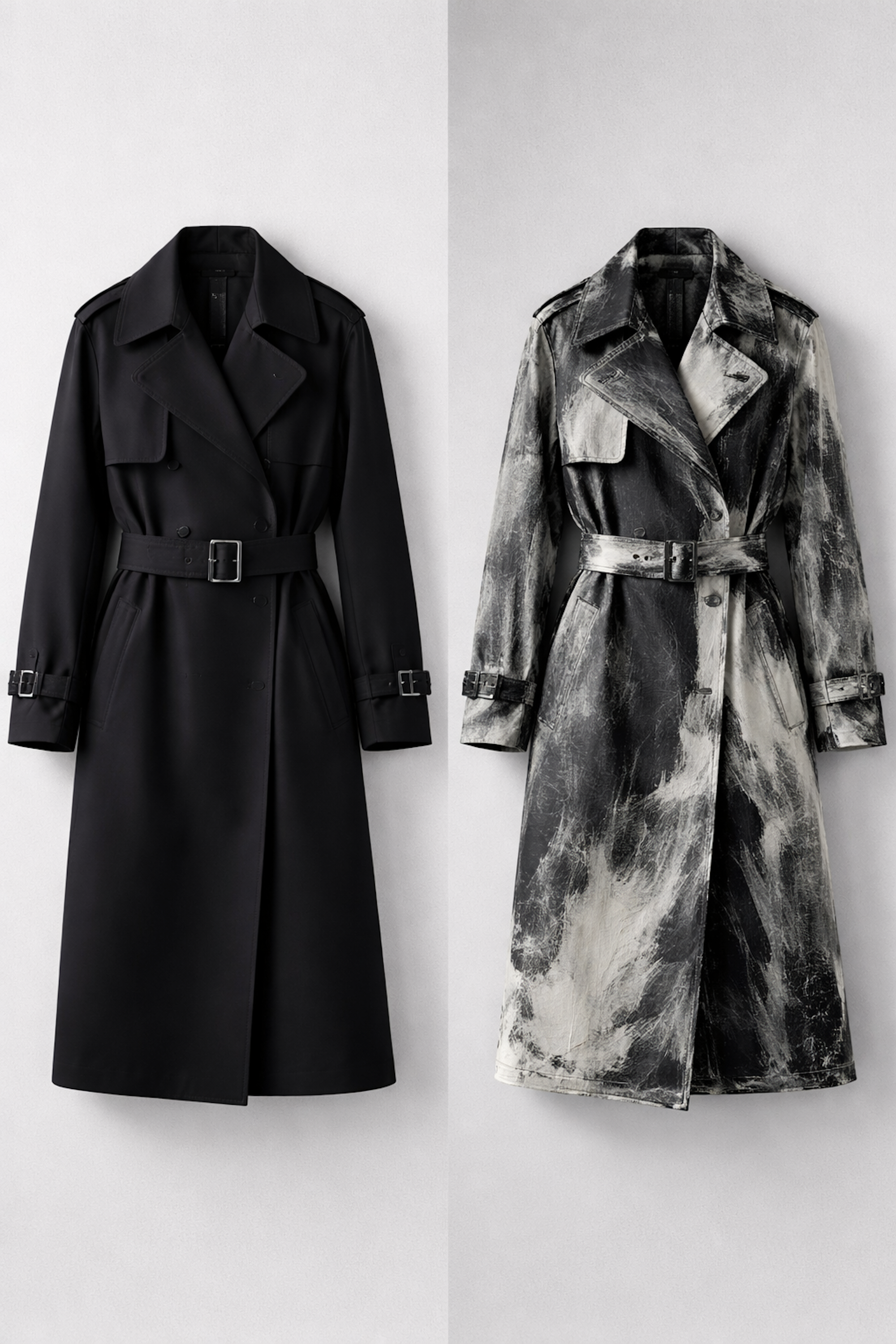
When does a piece remain commercial - and when does it become art? (© Edie Lou)
Within the semiotic framework developed by Ferdinand de Saussure, a sign consists of the relation between signifier and signified. Signifier is the perceivable form of a sign - the visible, material, or sensory element (in clothing: silhouette, fabric, color, cut) and the concept or meaning that this form evokes - the idea associated with it (e.g., authority, elegance, rebellion, belonging) is the signified. Crucially, this relation is arbitrary. There is no intrinsic connection between a given form and what it signifies. This means that the visible characteristics of an object do not, by themselves, determine its meaning. A garment’s color, cut, or material does not inherently contain the concepts it is understood to express. What something looks like does not automatically define what it means. The relationship between form and meaning is produced. Associations such as a black suit or trench coat conveying authority or distressed denim suggesting rebellion are not embedded in the fabric or structure of the garment. They are learned over time, shaped by cultural context, and reinforced through repetition and shared interpretation. What appears self-evident is, in fact, the result of collective agreement. In this sense, meaning is not located within the object, but emerges in the act of interpretation. The form provides the basis for perception, but the meaning arises from the systems through which it is read. Clothing communicates not because it inherently carries fixed meanings, but because it participates in a broader network of cultural codes that assign significance to what is seen. The signifier is given in the sense that it is perceptible since it refers to the visible or material form of the garment what can be directly observed. In this respect, it appears stable: the form is there, available to perception.
The signified, by contrast, is not fixed. It is fluid, context-dependent, and shaped by cultural codes. The meanings attached to a garment are not contained within its material form, but produced through interpretation. They vary across social groups, historical periods, and cultural environments. However, the signifier itself is not entirely neutral or self-evident. It is already perceived through learned categories and expectations. What is seen is never purely objective, but informed by prior knowledge and cultural familiarity. The apparent stability of the signifier is therefore relative: it is stable as form, but not independent of interpretation. In this sense, signification is always relational. The signifier provides the visible structure, while the signified remains open, negotiated, and contingent upon the cultural systems within which it is read.
When Fashion Crosses Into Art
Now that this has been clarified, the question becomes more precise: if garments always signify, when does a piece remain commercial - and when does it become art? If clothing always communicates, what distinguishes a functional or commercial piece from one that exceeds communication and enters interpretation? The distinction between fashion as art and clothing as utility does not lie in the presence or absence of signification, but in the structure of the signifying process itself. In most cases, the relation between signifier and signified is stabilized. Commercial clothing is not semantically empty; on the contrary. The commercial piece does not suspend meaning; it is made so that people understand it instantly and in the same way because it operates within environments where recognition must be fast, reliable, and socially aligned. As we said before, In everyday life, people are constantly read and evaluated - often within seconds. Clothing functions as a primary visual cue in this process. If a garment clearly signals “professional”, “formal”, or “casual”, it allows others to quickly position the wearer within a social context. This is a practical dimension that reduces uncertainty and facilitates interaction. Then, there is an economic dimension. Commercial fashion depends on scale. For a product to sell broadly, it must be legible to a wide audience. This requires aligning design with established codes of taste, desirability, and appropriateness. A garment that is immediately recognizable as “elegant” or “on trend” lowers the cognitive effort required for the consumer and increases the likelihood of purchase to a broader audience. Third, there is a social dimension. Clothing participates in systems of belonging and differentiation. Standardized meanings allow individuals to navigate these environments with a degree of predictability. Commercial clothing supports this by reinforcing widely accepted visual codes rather than destabilizing them.
So, this allows us to conclude that that most garments are not art, because they are designed to function within stabilized systems of meaning. A commercial piece communicates clearly, aligns with established expectations, and is meant to be immediately understood. Its role is not to open interpretation, but to ensure recognition. The meaning is controlled, predictable, and shared. This is precisely what allows it to operate effectively within everyday life and within the market.
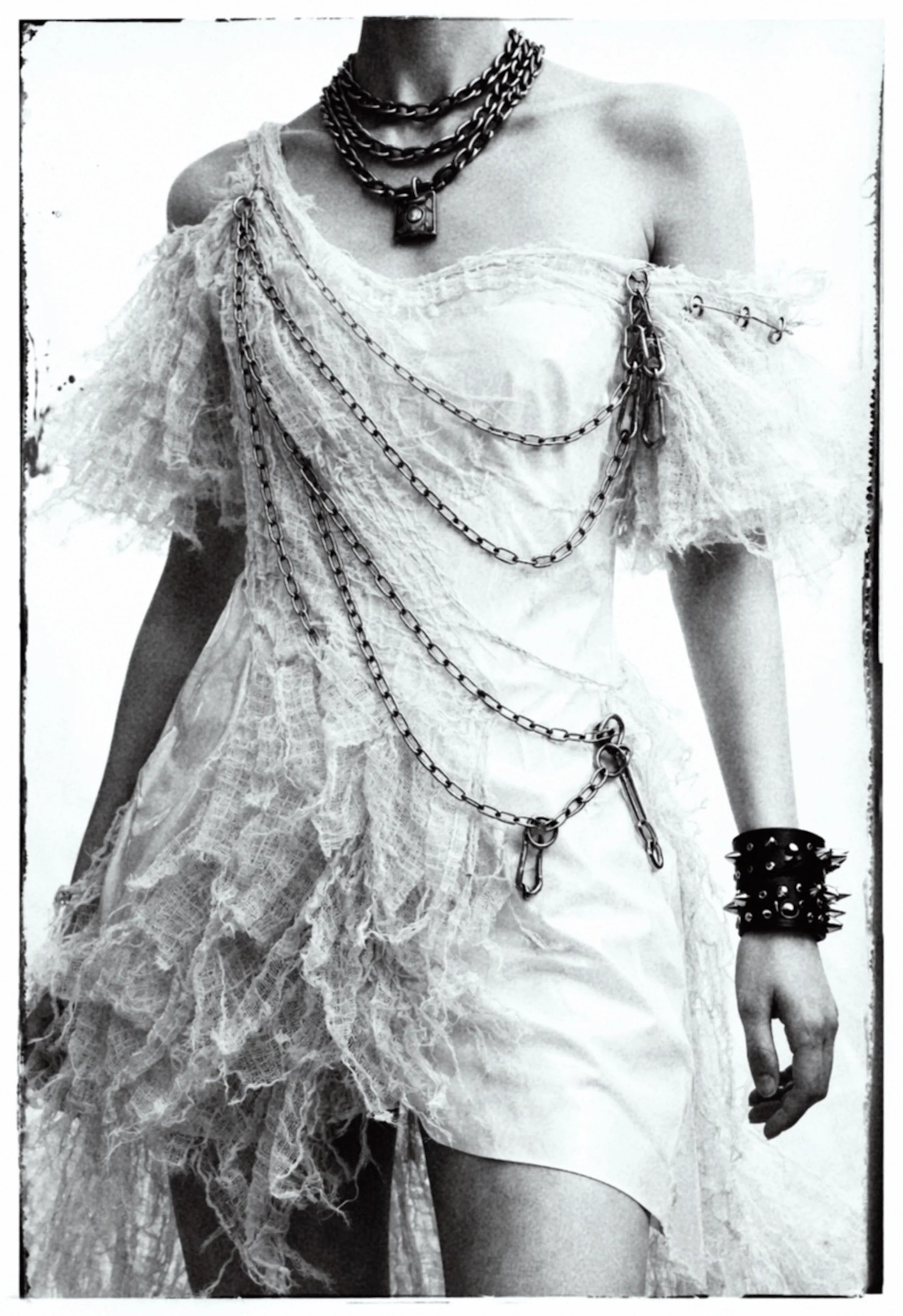
Meaning emerges through interpretation (© Edie Lou)
Fashion approaches art when semiotic stability breaks down. Commercial garments are designed to communicate efficiently, delivering a legible meaning within established codes of dress, taste and desirability. By contrast, artistic fashion no longer guarantees such immediate readability. The garment ceases to function as a transparent signifier and instead becomes a source of tension. Its form does not neatly resolve into a single signified, but opens onto contradiction, displacement and interpretive uncertainty. What is seen no longer confirms expectations; it interrupts them. This is where the logic of Dadaism becomes relevant. As a radical anti-art movement, Dadaism fundamentally challenged established aesthetic conventions by rejecting coherence, logic, and stable meaning. Its relevance to fashion lies in a shared operational logic. Dadaism fundamentally changed how art was understood. It redefined the conditions under which objects could function as art. This reconfiguration did not remain confined to art, but opened up a conceptual space for other disciplines, including fashion, to enter. Once art was no longer defined by beauty, craftsmanship, or aesthetic coherence, the determining factor shifted from an object's inherent qualities to its operational function. Art could no longer be identified solely by its material qualities or visual appearance, but by the conditions of its presentation, its context and the interpretations it generates. Dada changed art by shifting the focus from the object to its presentation and interpretation. Fashion adopts this logic when it begins to operate beyond function and stable social signaling. Garments are no longer restricted to function, decoration, and social signaling. Instead, it operates outside of stable systems of meaning, enabling the wearer to avoid being clearly positioned within recognized categories such as profession, status, or taste. Meaning is no longer required to be stable or singular. The garment is no longer limited to confirming existing codes; it can also disrupt them.
Under this condition, fashion becomes capable of functioning as art. The garment is no longer limited to use or immediate recognition - it becomes a medium through which ideas, cultural tensions, and emotional states can be expressed. Meaning emerges through interpretation. Traditionally, garments are designed to be understood quickly and correctly. When fashion starts to operate as art, this clarity is no longer objective. The garment does not resolve into one fixed meaning. It may combine conflicting references, distort familiar forms, or remove elements from their expected context. As a result, the viewer cannot immediately “read” it in a single, predefined way. The garment opens a space where meaning is not given in advance - it is inviting engagement and transforming how meaning operates within it. The viewer has to engage, interpret, and make sense of it. Through distortion, displacement, or unexpected context, clothing moves beyond delivering fixed meaning and begins to produce meaning itself. It signals beyond its immediate signification. In Sassurean terms, the signifier - the visible form of the garment - is no longer tied to a single, stable signified. Instead of producing one clear meaning, it opens a range of possible interpretations. The relation between what is seen and what is understood becomes unstable, allowing the garment to generate meaning rather than simply transmit it. In this configuration, the garment may challenge established perceptual frameworks, produce elements of visual or conceptual shock, and elicit questions.
And what counts as disruptive or shocking is obviously not fixed, but historically and culturally contingent. A gesture only produces rupture in relation to the expectations of its time. It emerges in relation to a shifting social and political landscape that continuously recalibrates what is acceptable, visible, and normalized. As societies evolve - through media saturation, technological acceleration, and changing power structures - forms that once appeared radical are absorbed into everyday visual culture. What previously unsettled perception becomes familiar, even desirable. The so called avant-garde is repeatedly neutralized through repetition, circulation, and commodification. Techniques that once unsettled perception - raw edges, exposed seams, deconstruction - lose their force as they become absorbed into the visual vocabulary of fashion. This produces a structural challenge for fashion. To operate at the level of disruption, it must not only generate new forms, but accurately register the conditions of its present moment. It requires an acute sensitivity to the cultural and political status quo. The difficulty, therefore, lies in being slightly ahead of the moment without losing contact with it. To produce rupture, fashion must intervene at the exact point where recognition still hold but begins to fracture. This demands more than stylistic innovation; it requires an understanding of the structures within which meaning is produced and stabilized. In this respect, fashion operates no differently from other artistic practices; its capacity to disrupt depends on how precisely it engages with the conditions of its time. If this condition is not met, the work no longer operates as art. It remains within the domain of commercial product or style, functioning through established codes rather than interrogating them. The question is not how extreme or visually striking a garment appears, but what it communicates and how it operates within its context. Even if a design looks complex, extreme, or visually striking, it does not automatically function as art. A garment may be elaborate yet remain within established codes, while a seemingly simple form - like a suit, one of the most codified and stable garments in our society - can become disruptive and art when it is placed, framed, or constructed in a way that challenges its usual meaning. When it is displaced into a context that unsettles its usual associations it begins to question the very codes it once stabilized.
https://www.sciencetheearth.com/uploads/2/4/6/5/24658156/plato_-_the_republic.pdf
https://homepages.hass.rpi.edu/ruiz/AdvancedIntegratedArts/ReadingsAIA/Aristotle%20Poetics.pdf
https://monoskop.org/images/7/77/Kant_Immanuel_Critique_of_Judgment_1987.pdf
https://www.hup.harvard.edu/books/9780674903463
https://monoskop.org/images/1/1b/Goodman_Nelson_Languages_of_Art.pdf
https://monoskop.org/images/a/a9/Duchamp_Marcel_The_Essential_Writings_of_Marcel_Duchamp.pdf
https://writing.upenn.edu/library/Tzara_Dada-Manifesto_1918.pdf
https://www.thamesandhudsonusa.com/books/dada-art-and-anti-art-softcover-second
https://www.are.na/block/4114619
https://archive.org/details/umbertoecoatheoryofsemioticszlib.org/page/98/mode/2up
https://moglen.law.columbia.edu/LCS/theoryleisureclass.pdf
https://ia903100.us.archive.org/19/items/GeorgSimmelFashion/Georg%20Simmel%20-%20Fashion.pdf
https://monoskop.org/images/d/de/Baudrillard_Jean_The_consumer_society_myths_and_structures_1970.pdf
https://persweb.wabash.edu/facstaff/hortonr/articles%20for%20class/baumeister%20and%20leary.pdf
https://www.taylorfrancis.com/books/mono/10.4324/9781315013084/fashion-communication-malcolm-barnard
https://yalebooks.yale.edu/book/9780300270952/fashion-at-the-edge/