
Where fashion meets technology: toward material awareness
The skin is the body’s largest organ, yet it is often overlooked in daily life and even in material culture. It regulates temperature, manages moisture, protects against pathogens, and maintains a complex biochemical environment essential to health. Despite its central role, the materials placed directly against the skin -bandages, dressings, and everyday textiles - rarely reflect this complexity. This disconnect is particularly visible against the backdrop of rising skin conditions, chronic wounds, and environments that challenge the skin’s ability to repair itself. It is also evident in the garments worn daily, which are often produced without consideration for dermatological compatibility or long-term exposure to dyes, finishes, and synthetic components. The gap between what the skin requires and what textiles typically provide has widened as clothing supply chains have accelerated and chemical treatments have proliferated. The expansion of high-speed, chemically intensive clothing production has created a clear mismatch between what the skin needs and what garments typically deliver.
In recent years, research groups across materials science, biomedical engineering, and textile research have begun addressing this gap. Through electrospinning, nanofiber fabrication, and the engineering of semi-permeable membranes, these scientists create structures that emulate key functions of the skin, such as porosity, moisture management, selective permeability, and compatibility with wound physiology. Skin-mimicking materials are now an active field of global research, with contributions from laboratories in Switzerland, Germany, the United States, India etc., each working toward more precise, responsive, and therapeutically relevant textile systems.
Research on how everyday garments interact with the skin is carried out in several specialized institutions worldwide. In Europe, the Hohenstein Institute for Textile Innovation in Germany conducts dermatological and chemical assessments of consumer textiles, evaluating irritants, allergenic dyes, formaldehyde-based finishes, pH levels, and other factors that influence skin compatibility. Their work contributes to standards such as OEKO-TEX ©, which assess chemical residues and biocompatibility in everyday clothing. In the United States, the Wilson College of Textiles at North Carolina State University provides a complementary perspective, with laboratories such as the Textile Protection and Comfort Center examining moisture management, thermal behavior, friction, and physiological stress in both everyday and protective garments. Together, these research efforts illustrate how the chemical and structural properties of clothing can influence skin function, ranging from irritation and inflammation to broader physiological responses.
While research in the United States and Germany examines the impact of everyday garments and chemical exposure on the skin, the work at Empa - Swiss Federal Laboratories for Materials Science and Technology - addresses a different challenge: the development of biocompatible, skin-mimicking materials for therapeutic and clinical use. At Empa, the Swiss Federal Laboratories for Material Science and Technology, the Laboratory for Biometric Membranes and Textiles led by Prof. Dr. René Rossi is one of the leading groups advancing this work. Their research focuses on electro spun membranes, nano fibrous structures, and encapsulated therapeutic agents designed to support the body’s natural healing processes. Rather than creating technological garments or speculative interfaces, the emphasis is on reliable, biocompatible materials that operate as functional partners at the surface of the skin. By stabilizing moisture, supporting wound environments, and enabling controlled release of active compounds, these materials mark a shift from textiles as passive coverings to scientifically engineered tools that assist the skin in its essential protective and regenerative roles.
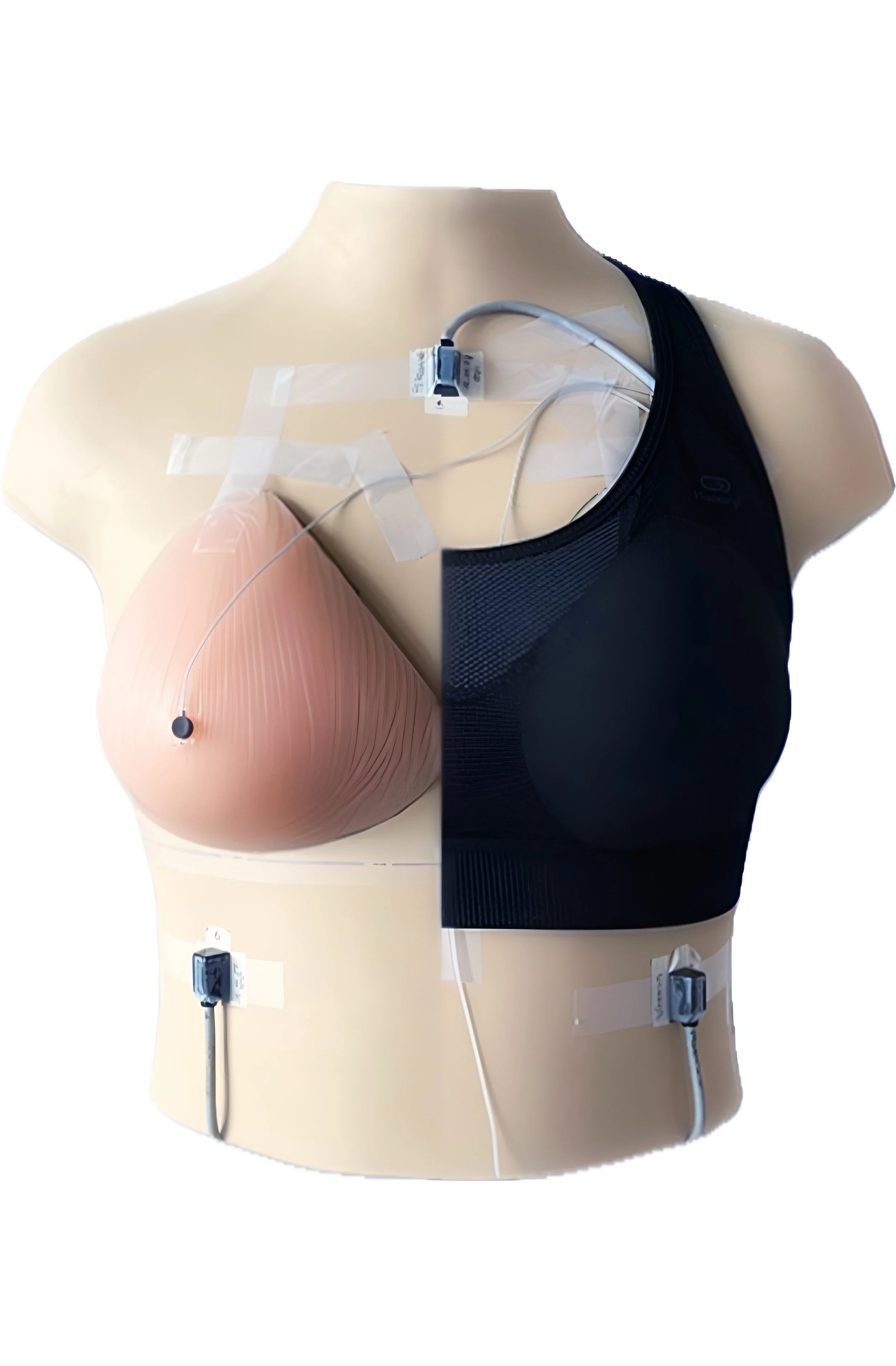
The skin is the body’s largest organ and one of its most complex (© Empa)
The Skin and Its Relationship to Fabrics
The skin is the body’s largest organ and one of its most complex. It regulates temperature, manages moisture, provides immune protection, and maintains a balanced biochemical environment necessary for physiological stability. Its layered structure forms a dynamic barrier: the outer stratum corneum limits water loss, deeper layers coordinate inflammatory and immune responses, and a dense network of nerves mediates constant feedback between the body and external conditions. This biological precision allows the skin to adapt to changing environments, but it also means that its equilibrium can be easily disrupted by prolonged contact with unsuitable materials.
Everyday fabrics introduce a range of physical and chemical exposures that the skin must continuously process. Garments are often dyed, softened, or chemically finished to achieve specific visual or functional qualities, yet these treatments are not routinely designed with dermatological compatibility in mind. Residual chemicals such as formaldehyde-based resins, disperse dyes, or certain finishing agents may provoke irritation or sensitization in susceptible individuals. Even when concentrations are low, repeated, long-duration exposure - especially in occluded areas such as underwear or sportswear - can increase the burden on the skin’s barrier function. Mechanical and environmental factors compound these challenges. Fabrics that trap heat or moisture alter the skin’s microclimate, creating conditions that can disrupt barrier integrity, promote inflammation, or increase susceptibility to friction-related injury. Synthetic fibers with low breathability may contribute to overheating or persistent dampness, while rough or tightly woven materials can intensify mechanical irritation over time. These effects vary widely among individuals, but they illustrate how clothing can shape the physiological environment of the skin in ways that are rarely acknowledged.
The rising prevalence of skin conditions such as eczema, contact dermatitis, and chronic irritation reflects the interaction between biological sensitivity and material exposure. While not all garments pose risks, the absence of consistent biocompatibility testing in consumer textiles means that the relationship between clothing and skin health remains inadequately examined. Understanding the skin as a responsive organ rather than a passive surface clarifies why textile composition, chemical finishing, and structural design matter. It also establishes the context for research that evaluates how everyday fabrics affect the body - and for the development of advanced materials designed to support, rather than compromise, the skin’s protective functions.

Research on everyday garments (© Edie Lou)
Research on Everyday Garments
Understanding how textiles influence the skin requires systematic investigation across both chemical and physiological dimensions. Textiles are heterogeneous systems, composed of fibers, polymers, dyes, finishing processes, mechanical structure and garment design, each of which can influence the skin’s barrier integrity and inflammatory responses. Because these interactions cannot be inferred from material specifications alone, we cannot predict how a fabric will affect the skin by looking at its composition or manufacturing data, research groups must test garments in laboratory and simulated real-life conditions to understand irritation, chemical release, moisture behavior and mechanical effects. A fabric may contain dye that is safe in principle, but the migration rate of that dye onto moist skin is unknown or a synthetic fiber may be breathable on different materials, but friction, occlusion, or heat build-up depends on the garment’s construction and real wear conditions. A finishing chemical may meet safety thresholds, but it may still cause irritation in occluded or high-humidity areas of the body. The pH listed for a fabric in its dry state may change when mixed with sweat, influencing the acid mantle of the skin.
In Europe, the Hohenstein Institute for Textile Innovation has played a critical role in characterizing these interactions. The institute performs analytical chemistry and dermatological compatibility testing on consumer textiles, quantifying substances that may pose dermatological or toxicological risks. Using analytical methods such as chromatography and mass spectrometry, the institute tests for formaldehyde, allergenic dyes, heavy metals, organotin compounds, phthalates and other regulated chemicals. It also measures textile pH and conducts standardized extraction tests to determine whether harmful residues may be released during normal wear or laundering, providing a reliable assessment of whether a fabric could disturb the skin’s natural balance and release compounds at concentrations that exceed toxicological thresholds or are known to provoke irritation, sensitization, or other adverse biological effects.
As one of the principal laboratories behind the OEKO-TEX© STANDARD 100 system, Hohenstein compares its test results with predefined toxicological threshold values established by OEKO-TEX©. OECO-TEX© originated in 1992 as a cooperative initiative between Hohenstein Institute (Germany) and ÖTI - Institut für Ökologie, Technik und Innovation GmbH - a scientific testing and research institute based in Vienna, Austria. These two institutions created OEKO-TEX© as a joint international standard to test textiles for harmful chemicals at a time when global textile production was moving rapidly to countries with weaker regulations. From this collaboration, the OEKO-TEX© Association was formed. It later expanded to include additional accredited laboratories in Switzerland, Japan, Spain, and other countries. However, the thresholds values established bey OEKO-TEX© are based on exposure-risk assessments and dermatological data, enabling a clear, reproducible method for determining if a textile is safe for direct skin contact. Hohenstein’s role is therefore analytical and regulatory: it ensures the textile is chemically safe, but it does not evaluate how the fabric physically or biologically interacts with human skin during wear.
OEKO-TEX© functions as the standard-setting body: it establishes the list of regulated substances, defines the toxicological threshold values and prescribes the analytical methods required for certification. Hohenstein serves as the testing institution that applies these criteria. The institute conducts the chemical analyses and determines whether a textile meets the limits specified by OEKO-TEX©. In this structure, OEKO-TEX© provides the regulatory framework while Hohenstein performs the empirical verification, ensuring that certification reflects independent, replicable laboratory evidence - a regulatory pathway for evaluating the biocompatibility of everyday garments.
In the United States, the Wilson College of Textiles at North Carolina State University contributes complementary insights into the physiological and mechanical dimensions of textile-skin interactions. At the Textile Protection and Comfort Center (T-PACC) - a multidisciplinary research center that evaluates how protective and performance textiles interact with human thermophysiology, comfort and safety - researchers investigate heat transfer, moisture vapor transport, sweat accumulation, friction coefficients and compression behavior under both standardized and scenario-specific conditions. The center is dedicated to understanding and improving how textiles perform on the human body - especially under extreme, hazardous, or high-intensity conditions.
Situated within a leading textile engineering institution, T-PACC provides an integrated environment for testing how fabrics and clothing systems perform under a range of environmental and operational conditions. Across its coordinated laboratories, the center conducts scientific assessments of thermal comfort, breathability, moisture management, cooling performance, tactile comfort, and the mechanical behavior of fabrics. These evaluations make use of advanced instrumentation, including sweating manikins and related thermal-moisture testing platforms, as well as both objective and subjective comfort-assessment methods. T-PACC’s facilities also support research into protective performance areas such as flame and thermal protection, chemical and particulate protection, and the evaluation of gloves, headwear, footwear, and complete protective ensembles. A significant portion of the center’s work addresses the needs of high-demand occupational fields - including firefighting, industrial work, and industrial labor - where clothing systems must balance comfort with stringent protective requirements. By testing materials and full ensembles under controlled and application-specific conditions, T-PACC generates data that informs product development, prototype evaluation, and the creation or refinement of performance standards. Through its combined focus on comfort and protection, the center provides an integrated research and testing resource for industry, government, and academic partners working to evaluate and enhance the performance of textile-based systems.
Through dermatological assessments, chemical analyses, and thermal-physiological testing, institutions such as Hohenstein and North Carolina State University have established a rigorous understanding of how these variables interact at the skin interface. While research on textile-skin interaction is conducted at various institutions worldwide, Hohenstein and North Carolina State University provide especially comprehensive insight by integrating dermatological, chemical, physiological, and mechanical analyses. Those institutions have established much of the foundational knowledge of how materials behave at the skin interface. These frameworks, developed through human testing, standardized substrates, and physiological manikins, form the scientific basis upon which newer approaches now build.
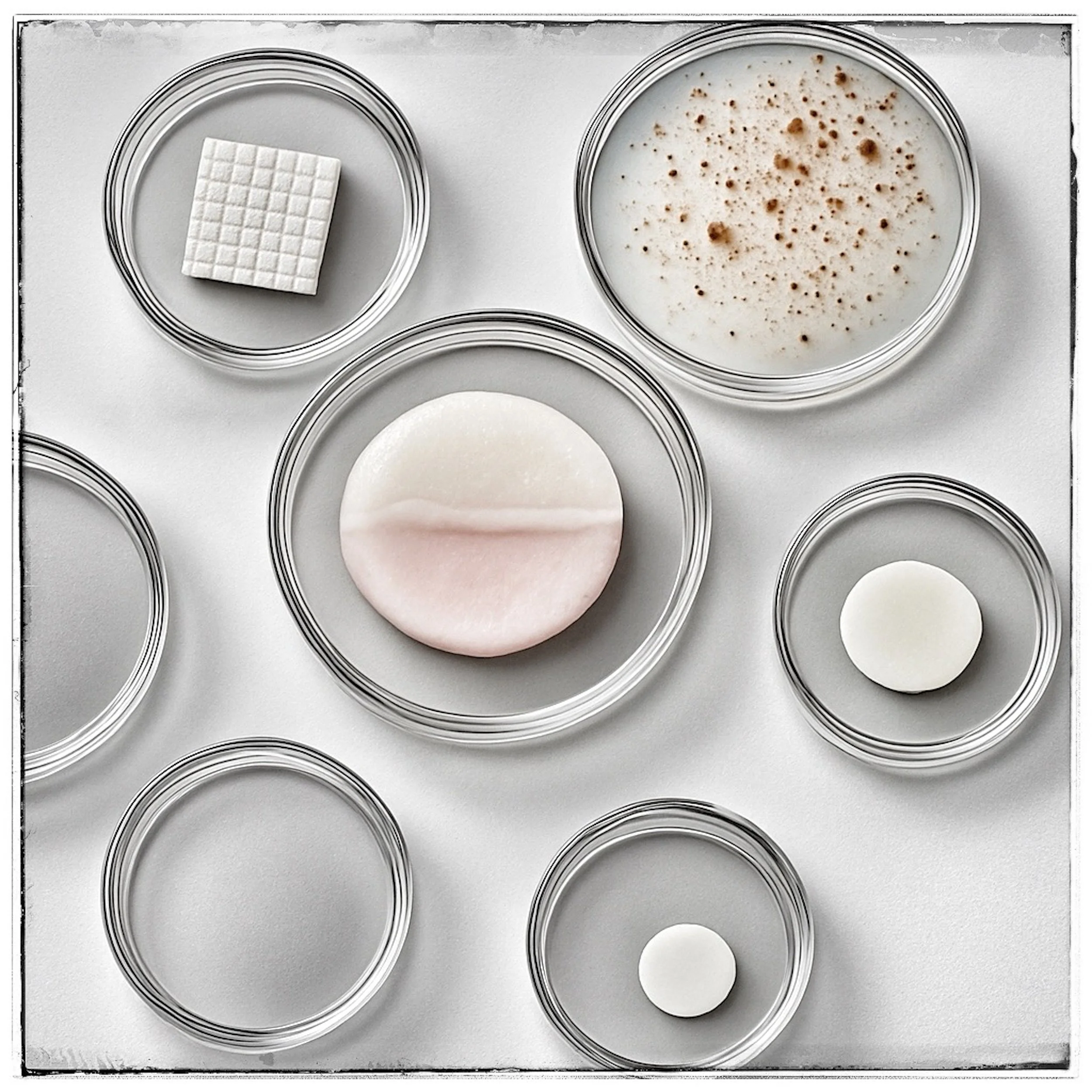
From measurement to biometric skin simulation (© Edie Lou)
Empa: From Measurement to Biometric Skin Simulation
If institutions such as Hohenstein and North Carolina State University have established the empirical foundations of textile-skin interaction, Empa - the Swiss Federal Laboratory for Materials Science and Technology or in German: Eidgenössische Materialprüfungs- und Forschungsanstalt- advances the field through a distinctly different methodological logic. Empa is a public Swiss research institution, part of the ETH domain - ETH refers to Swiss Federal Institute of Technology or in German: Eidgenössische Technische Hochschule. The ETH Domain is Switzerland’s federally funded national research network that unites its two technical universities, ETH in Zurich and EPFL in Lausanne, which combine teaching and research, with three major research institutes - Empa, PSI - Paul Scherrer Institute -, WSL - Swiss Federal Institute for Forest, Snow, and Landscape Research, in German: Eidgenössische Forschungsanstalt for Wald, Schnee und Landschaft - which conduct research without awarding academic degrees, under a shared system of governance, strategic coordination, and scientific collaboration.
Empa, rather than focusing primarily on measuring how existing textiles behave on living skin, test subjects, or conventional surrogates, develops skin-mimetic, membrane-based platforms and body-mimetic systems that reproduce selected physical and functional properties of human tissue. These bioinspired platforms are designed to reproduce selected, physiologically relevant surface and transport properties of human skin - particularly hydration-dependent barrier behavior - moisture-exchange at the system level. This allows textile performance to be studied against controlled, skin-analog models that capture key functional aspects of cutaneous interaction, rather than relying solely on passive substrates or the inherent variability of human testing. Instead of testing textiles only on flat, inert materials (like plastic plates, metal surfaces, or simple foams) or directly on human skin, Empa uses artificial skin-like models that behave in important physical ways like real skin. Empa’s artificial skin models are explicitly designed to act as controlled physical analogues of skin, particularly for hydration-dependent friction and surface interaction with textiles.
At the surface level, these systems realistically reproduce wet, damp, and dry states that strongly influence friction, adhesion, and irritation risk. While they do not replicate the full biological barrier function of living skin, they reliably model key surface and transport phenomena relevant to barrier stress in textile and contact studies. One of the most strongly validated capabilities of these platforms lies in their ability to accurately model moisture and hydration dynamics. The gelatine-based artificial skin explicitly simulates dry, hydrated, and wet conditions, with hydration inducing, softening, and corresponding changes in frictional response in a manner consistent with real human skin. This makes the model particularly well suited for studying textile interaction, adhesion, and irritation mechanisms under controlled and repeatable conditions.
At the mechanical level, the systems reproduce deformation and frictional behavior under defined loads in a reduced, functional sense. They are well adapted for investigating pressure-, shear-, and movement-related effects at the surface level, while deliberately not claiming to reproduce the full multi-layered mechanical complexity of living skin across all loading regimes. Beyond surface mechanics alone, Empa integrates artificial skin models, membrane systems, advanced measurement platforms, and thermal manikins to study coupled heat-and moisture-transport processes in clothing systems. Although direct thermal replication at the level of living skin remains an active research frontier, this integrated infrastructure allows realistic investigation of microclimatic exchange through combined experimental and simulation-based approaches.
Crucially, these platforms are developed as physiological analogues precisely because flat plates, inert polymers, or purely mechanical rigs cannot reproduce the coupled hydration-dependent, frictional, and surface-interaction behavior typical of real skin. Empa’s approach therefore shifts textile testing away from passive substrates toward bio-relevant physical analogues. Finally, Empa explicitly frames these systems as controllable, repeatable, and ethically robust alternatives for early-stage mechanism studies, significantly reducing reliance on variable and ethically sensitive human testing during initial screening. Human testing is thus reserved primarily for later-stage validation rather than for foundational mechanistic investigation.

Wound-Healing Platforms (© Edie Lou)
Biomedical Skin & Wound-Healing Platforms
In parallel to its textile and materials testing infrastructure, Empa operates a biomedical research track focused on skin-relevant medical systems rather than consumer wear applications. This work includes the development of engineered in-vitro skin models, wound-relevant scaffold and hydrogel materials, antimicrobial and bifunctional surfaces, and material systems designed for controlled therapeutic delivery. Unlike textile testing platforms, these systems are in development and aim to interact with living cells and biological tissue processes. The early skin model (gelatin+cotton+crosslink) is a physical/functional analogue, not a living tissue. It reproduces skin’s friction, wet/dry behavior, and hydration-dependent mechanics, but does not include living cells, immune or vascular systems. (The newer 2025 hydrogel-based “artificial skin” effort does aim for a living, cell-containing 3D skin model, but it still may be under development, not yet widely validated, or fully equivalent to in vivo skin. This we don’t know, yet.)
These biomedical platforms are designed to model selected aspects of wound and skin physiology under controlled laboratory conditions. Depending on the research objective, they may incorporate living cells, biocompatible matrices, hydrated hydrogel networks or three-dimensional biomaterial scaffolds, and bioactive compounds in order to study how tissue responds to injury, microbial exposure, or material-mediated therapeutic intervention. Their purpose is the targeted experimental reconstruction of key healing-relevant mechanisms, such as cell migration, moisture regulation, antimicrobial activity, and controlled substance release. Within this framework, Empa’s platforms move beyond purely physical or mechanical analogues and enter the domain of functional biological interaction. They enable the investigation of how material structure, surface chemistry, hydration behavior, and biochemical signaling influence tissue regeneration and infection control, while maintaining the experimental control, reproducibility, and regulatory compatibility required for translational research.
Because the term “artificial skin” spans fundamentally different ontological categories it becomes necessary to clarify how such systems are formally positioned within biomedical research. Within EU and Swiss biomedical research frameworks, in-vitro systems are formally positioned as ethically controlled tools for mechanistic investigation, explicitly designed to replace, reduce, and refine the use of animal and human testing under the 3R principles, while enhancing experimental reproducibility and parameter control. Such systems are used to isolate specific biological, chemical, or mechanical processes under tightly regulated conditions and are structurally embedded within translational research protocols and medical device development pathways. Crucially, they are never treated as full biological equivalents of living organisms, but as epistemically limited, preclinical models whose validity is defined by scoped mechanistic relevance rather than by organism-level substitution. In other words, even when such models contain living human cells, they are not considered equivalent to real skin in a living body. They are used as tightly controlled test systems to study specific functions - such as cellular response, hydration effects, or surface mechanics - rather than as replacements for living organisms.

Most visibly in performance wear or sportswear (© Edie Lou)
Conclusion - Towards a Skin-Aware Future
So…as research into skin and textiles quietly multiplies in laboratories around the world, the real question is what any of this actually means for the person standing in front of their wardrobe. The material culture of clothing still largely treats the skin as a neutral surface. Most garments are designed for appearance not for the organ they rest on every hour of the day. Interesting, isn’t it? Even though everything today revolves around well-being, wellness, healthy eating, and mental health - which is more than important, don’t get me wrong - the skin and what is placed on it - remains largely overlooked. Chemical finishes, synthetic fibers, aggressive dye processes, and accelerated production cycles define the status quo, while sensitivity, irritation, and chronic skin conditions continue to rise in the background. Although research has long shown that textiles influence the skin’s microclimate this knowledge has barely entered the public understanding.
The work of institutions such as Hohenstein, OEKO-TEX©, and North Carolina State University reflects the systematic development of standardized methods to quantify chemical exposure, dermatological compatibility, and physiological stress associated with textile-skin contact and limit the damage textiles can cause to the skin. Empa’s research points towards what lies beyond this regulatory baseline: a future in which materials are not only chemically safer, but biologically responsive. Together, these approaches - risk control and functional innovation - form the scientific backbone behind what textiles are becoming. Where the field is going is not toward science fiction clothing, but toward a slow, fundamental shift in how materials are understood - toward biologically informed design. In medical settings, this future is already present in wound dressings, antimicrobial membranes, and drug-releasing materials. In everyday clothing, it is only beginning to emerge - most visibly in performance wear, protective textiles, and early smart-fabric applications - but the direction is clear: what touches the skin will increasingly be judged not only by how it looks, obviously, but by how it behaves.
What does that mean for the everyday consumer? Well - it begins with material literacy - but not in the simplistic opposition of “natural versus synthetic”. Skin compatibility is not determined by origin alone, but by processing, finishing, and use. A heavily bleached, resin-finished cotton can irritate the skin more than a well-engineered synthetic. Some synthetics manage moisture, friction, and bacterial growth more effectively than badly finished natural fibers. At the same time, untreated natural fibers - raw cotton, wool, silk, linen - can be exceptionally skin-compatible, obviously, when processed with restraint. The determining factor is material intelligence. Also, many textiles simulate medical protection through chemical overkill, disrupting skin biology and ecosystems in the process. Real medical materials do the opposite: they intervene only when necessary. Finally, consumers can already alter the biological and ecological load of the system by changing how garments are used rather than only what is bought: slowing replacement cycles - buy simply less and use what you have -, washing less aggressively, avoiding unnecessary surface coatings, refusing ultra-cheap volatility, and redirecting value toward repair, reuse, traceable production, and material honesty. None of this requires future innovation. It only requires a shift toward materially grounded responsibility - where the body, the wearer, and the ecosystem become structurally present in every purchasing decision.
For designers, the tools are already on the table. Today it is fully possible to work with low-impact dye houses, skin-compatible fibers, mechanically finished textiles, non-irritating constructions, and sourcing standards that limit harmful residues. Designers can reduce friction through pattern making, choose fiber blends based on moisture and thermal behavior, and treat finishing choices as physiological decisions, not just aesthetic ones. Research at Empa and similar institutions points to additional possibilities - materials that regulate moisture, support wound environments, or deliver therapeutic compounds - but these developments remain largely within clinical and experimental contexts for now. The future of skin-aware design does not require waiting for that technology to become commercially available; it requires redefining quality around long-term contact with the body. But it will undoubtedly be shaped by innovations that are still unfolding, many of which may transform material culture in ways not yet imaginable.
https://www.empa.ch/web/s401/skimimstruc
https://www.oeko-tex.com/en/about-us/organisation/
https://www.hohenstein.com/en/
https://textiles.ncsu.edu/tpacc/mission/
https://ethrat.ch/en/eth-domain/portrait-eth-domain/
https://pmc.ncbi.nlm.nih.gov/articles/PMC7271707/
https://www.vtg.admin.ch/en/nsb?id=100354
https://pubmed.ncbi.nlm.nih.gov/19043850/
https://onlinelibrary.wiley.com/doi/full/10.1111/j.1600-0625.2008.00786.x