
LABYRINTHINE people: how youth became a permanent identity
There was a time when “youth” did not yet exist as the cultural obsession it is today - although the phenomenon itself is no longer particularly young either. What emerged in the postwar decades as a new consumer category built around music, fashion, rebellion, and teenage identity has now existed for more than half a century. You heard that right: youth culture was built around rebellion, and teenage identity - which raises a slightly uncomfortable question: what came first, the chicken or the egg - the rebellion or the business built around it? The answer is likely both. Postwar youth movements expressed - understandably - generational frustration and desire for social distinction - yet industries almost immediately recognized the extraordinary commercial potential of youthful rebellion and transformed it into one of contemporary capitalism’s most profitable cultural systems. What emerged in the second half of the 20th century as a distinct youth culture gradually evolved into one of the defining emotional and aesthetic structures of our life today. Music, fashion, cinema, advertising, and celebrity culture transformed youth from a temporary stage of development into a powerful symbolic ideal associated with rebellion, novelty, emotional intensity, and freedom. Figures such as James Dean and Edie Sedgwick did not simply represent a generation; they helped establish an entire visual and psychological language of youthfulness that continues to shape contemporary culture decades later. Yet both also embodied the darker underside of youth mythology - something we will talk about later in the context of the romanticization of emotional suffering and coming-of-age.
But youth culture did not emerge “easily”, nor was it simply invented overnight by advertisers or corporations. Its emergence after the Second World War was the result of multiple historical transformations occurring simultaneously across Western industrial societies. Postwar economic expansion created conditions that had previously existed only on a limited scale: rising household income, mass production, expanding middle classes, and increased leisure time. For the first time, large numbers of young people emerged as a distinct social and economic group possessing increasing spending power while remaining culturally separated from full adult responsibility for longer periods of time. This transitional space became socially and economically significant in entirely new ways. At the same time, mass media systems expanded dramatically. Radio, cinema, magazines, recorded music, and later television allowed young people across different regions to consume the same music, imitate the same clothing, admire the same celebrities, and participate in shared cultural references. Youth, therefore, began to function not merely as a development stage of life, but as a collective cultural identity. Youth increasingly became associated with authenticity and emotional intensity in contrast to the perceived rigidity and conformity of older generations. What emerged was therefore both, an authentic cultural phenomenon and a highly profitable economic system.
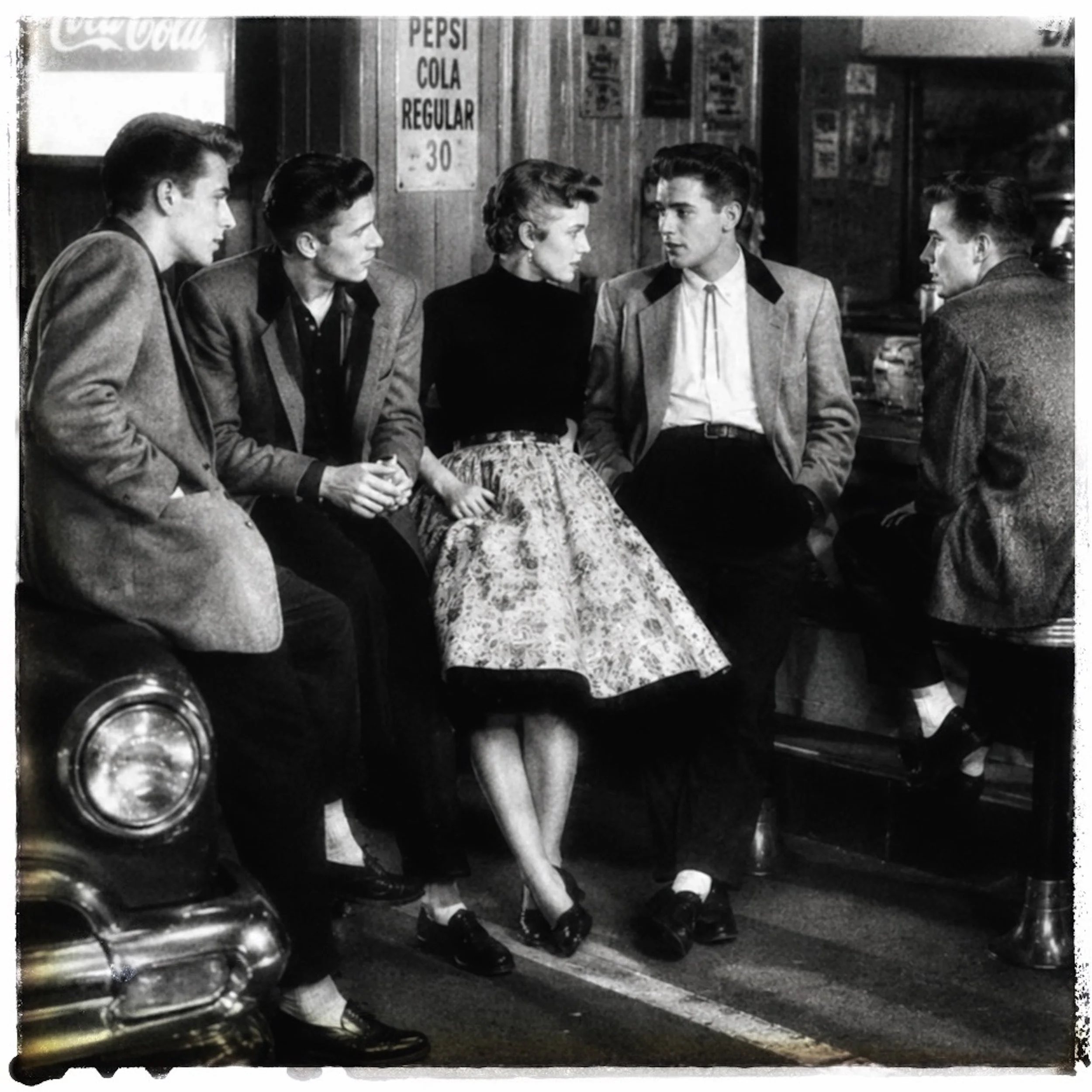
Peer-group identity became central to selfhood (© belongs to the rightful owner)
The invention of the Teenager
So, what is youth culture? To answer that, it is necessary to go back and understand how the concept of the teenager emerged. Being teenager is often treated as a natural and universal stage of life, yet historically the category is remarkably recent. Before industrial modernity, the transition between childhood and adulthood was comparatively compressed, particularly within agrarian and early preindustrial societies. Children frequently entered labor systems at young ages, contributing economically to family survival long before reaching biological maturity. Social roles were more rigidly defined, and fewer intermediate identity stages existed between dependence and responsibility. In many European and American contexts prior the twentieth century, adulthood was not understood primarily as psychological self-discovery but as functional integration into labor, marriage, religion, and family structure. The modern idea of adolescence as a prolonged psychological, social, and cultural condition would have appeared unfamiliar within societies organized around necessity rather than self-expression. Historically, puberty existed biologically, but “adolescence” as we understand it today - with its own emotional world, self-discovery, and identity experimentation - was far less developed or socially prolonged. As the historian Phillipe Ariès argued, childhood and adolescence are not fixed biological realities in their cultural meaning, but historically constructed categories shaped by economic systems, institutions, and collective social imagination.
The emergence of industrial capitalism fundamentally reorganized these structures. Expanding economies increasingly required literate, disciplined, and specialized workers, leading to extended schooling and delayed entry into full economic participation. Simultaneously, urbanization concentrated large populations of young people into shared educational and social environments, producing unprecedented forms of age-based identity formation. This transformation emerged not only through industrialization itself, but through the gradual expansion of public education and later university access, opportunities that had historically been reserved largely for elites. As industrial economies grew more technologically and administratively complex, literacy, specialization, and formal education became increasingly necessary, leading many states to expand compulsory schooling during the nineteenth and twentieth centuries. After the Second World War, rising prosperity and the growth of middle-class societies further widened access to higher education, allowing unprecedented numbers of young people to spend extended periods outside the context of immediate economic survival. Schools and universities therefore became more than educational institutions alone; they created new social environments in which youth could emerge as a distinct cultural and psychological category. For the first time in history, large populations of young people were able to inhabit a prolonged stage between childhood and adulthood shaped not only by labor, but by learning, experimentation, peer-group identity, mobility, and self-formation. But don’t get me wrong. Of course, universities had long functioned as centers of intellectual and political youth culture, producing student movements, artistic avant-garde, and resistance figures such as Sophie Scholl long before the postwar period. What changed after the Second World War was not the existence of youth consciousness itself, but its scale. Expanding access to education, rising prosperity, and mass media transformed what had once been relatively elite student cultures into a broad social and economic category increasingly visible across society.
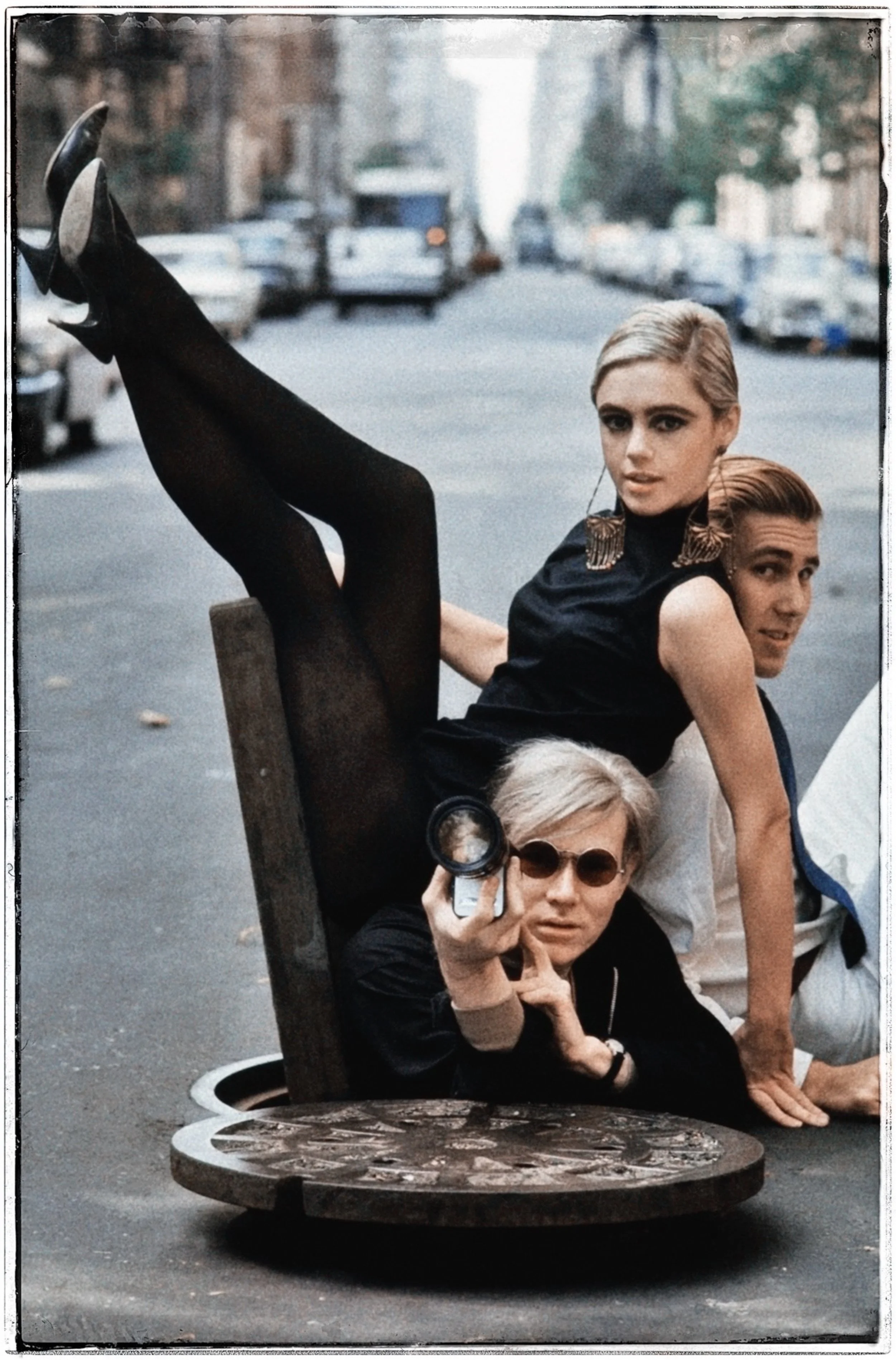
Edie Sedgwick & Andy Warhol (© Burt Glinn)
Although the term “teenager” began appearing in the early twentieth century, particularly within American advertising and media culture, it was only after the Second World War that the teenager fully emerged as a distinct, social, cultural, and economic identity. Rather than moving directly from childhood into labor, young people occupied a newly prolonged intermediate condition characterized by partial dependence, social visibility, and growing consumer influence. Industrial society also generated synchronized rhythms of mass culture through magazines, newspapers, cinema, radio, and eventually television, allowing youth to emerge not merely as isolated individuals, but as a recognizable collective demographic. For the first time, large populations of young people consumed similar music, fashion, language, and symbolic references simultaneously. The teenager became visible as a social category precisely because industrial modernity rendered youth culturally legible at scale. Postwar affluence accelerated this transformation dramatically. In the United States and parts of Europe after the Second World War, rising household incomes, suburbanization, and expanded leisure time created the material conditions for youth culture to flourish independently from direct economic necessity. Young people increasingly occupied a historically unusual position: although many remained financially dependent on family structures and prolonged education, they also possessed growing amounts of discretionary spending power, transforming youth into a highly influential consumer demographic. This economic positioning made youth extraordinarily attractive to advertisers and entertainment industries. Record labels, fashion companies, film studios, and later television networks increasingly recognized adolescence not as a temporary developmental stage, but as a highly profitable emotional market. Peer-group identity became central to selfhood as young people increasingly derived meaning from horizontal cultural affiliation rather than exclusively from family or local community structures. Historically, people derived much of their identity vertically - from older generations and fixed institutions. Meaning came primarily through family, religion, class, local community, village structures, and multigenerational social roles. Identity was transmitted downward through stable hierarchies. But after WWII, young people increasingly began forming identity horizontally - through relationships with peers of the same generation. Schools, universities, media, and youth markets intensified this process by concentrating similarly aged people together.
The cultural consequences of this shift extended beyond commerce into the structure of adulthood itself. The media theorist Neil Postman argued that television began collapsing traditional informational boundaries between children and adults by exposing younger audiences to previously restricted forms of knowledge, entertainment, and social behavior. As mentioned before, earlier societies had maintained adulthood partly through informational hierarchy: adults possessed access to knowledge, rituals, and institutional authority unavailable to children. Mass electronic media weekend these distinctions by flattening access to images, language, and emotional codes across generations. Television did not create youth culture alone, but it accelerated the erosion of adulthood as a clearly differentiated epistemic category. Long before the internet transformed identity into continuous digital performance, mass media had already begun destabilizing the symbolic authority of maturity itself. Mass media weekend the cultural assumption that adulthood naturally represented the highest or most legitimate social state. Instead, youth increasingly became the admired condition. By the 1960s, this transformation intensified into what Vogue editor Diana Vreeland famously described as a ““youth quake”, a cultural shift in which youth emerged as a dominant aesthetic, emotional, and commercial force embodied by figures such as Edie Sedgwick and Twiggy, whose fragility, androgyny, spontaneity, and performative modernity came to symbolize an entirely new cultural ideal. Youth was no longer understood merely as preparation for adulthood. Increasingly, it became culturally meaningful in its own right - a condition to inhabit, imitate, preserve, and ultimately commercialize indefinitely. The postwar decades did not simply produce new generations of young people; they produced an entirely new relationship between capitalism and identity.

Rebellion was the most visible way to reject and distance oneself from a social order increasingly perceived as rigid, conformist, repressive, and morally weak (© belongs to the rightful owner)
Rebellion - An Attitude and a Product
One of the central characteristics of modern and contemporary youth culture is rebellion and anti-conformity. Yet the roots of this cultural orientation did not suddenly emerge after the Second World War. Earlier forms of generational experimentation and visible youth identity had already appeared during the late Edwardian and interwar periods through aristocratic or socially prominent young women associated with fashionability, nightlife, and modern femininity as precursors to later youth icons like Sedgwick, Twiggy or later Alexa Chung or Camille Rowe – the It girls culture. Other important early forms of generational rebellion as a way of differentiation from conventional adulthood were jazz culture, swing kids, avant-garde art movements, flapper fashion, bohemianism, student movements, modern cinema, and changing attitudes toward sexuality and self-expression. The 1920s, in particular, revealed growing tensions between younger generations and traditional social structures, suggesting that the cultural foundations of modern youth identity were already beginning to form. During the interwar period, particularly within urban cultural centers such as Berlin during the Weimar era, underground artistic movements, cabaret culture, queer visibility, and alternative forms of self-expression increasingly challenged traditional bourgeois norms and established social structures. Student resistance movements and intellectual opposition to authoritarianism also developed during this period, later embodied by figures such as Sophie Scholl, whose resistance against National Socialism represented not merely political dissent, but a profound moral rejection of institutional conformity and authoritarian obedience. Many aesthetic and psychological features later associated with modern and contemporary youth culture were therefore already visible before the Second World War. Yet these developments remained comparatively fragmented and socially limited. Universities, artistic circles, and urban cultural centers produced influential youth movements, but they did not yet constitute the large-scale, economically integrated youth culture that would emerge after 1945.
Several structural conditions prevented youth culture from consolidating fully after the First World War. Much of Europe and large parts of the industrial world remained economically unstable, marked by inflation, political extremism, unemployment, and later the Great Depression. Mass media systems such as radio and cinema existed, but had not yet achieved the level of synchronization later produced by television and postwar consumer culture. To understand why anti-conformity and modern youth culture did not fully consolidate after the First World War, but emerged powerfully after the Second, it is important to recognize that societies responded very differently to the aftermaths of the two catastrophes.
Before the postwar period, access to education, philosophy, political critique, and independent intellectual formation remained comparatively limited for large parts of the population. Knowledge was still strongly mediated through institutional gatekeepers such as the church, the state, political authorities, all of which retained significant power over how reality was interpreted and understood. Before the postwar expansion of critical education, media plurality, and independent intellectual culture, many societies still largely treated authority as inherently legitimate and socially stabilizing. The catastrophic events of the Second World War, however, increasingly forced populations to confront the possibility that ordinary obedience, institutional hierarchy, and social conformity could themselves become mechanisms of violence and moral collapse. The expansion of education, literacy, media access, material stability, and independent intellectual formation gradually increased the capacity for critical self-reflection and resistance to centralized authority. As more individuals gained access to alternative systems of thought outside rigid institutional control, inherited authority structures increasingly lost their unquestioned legitimacy. Anti-conformity therefore emerged because growing numbers of people became intellectually capable of questioning the systems surrounding them independently. (But obviously, obedience did not disappear completely.)
One of the crucial historical transformations after the Second World War was the collision between expanding individual freedom and deep distrust toward the social structures that had shaped the first half of the twentieth century. Fascism, genocide, propaganda, militarism, and industrialized mass violence profoundly destabilized the moral legitimacy of rigid authority, institutional obedience, nationalism, and social conformity. For many young people, the adult world no longer appeared unquestionably rational, ethical, or desirable. The same structures associated with discipline, hierarchy, emotional restraint, and collective obedience had culminated in catastrophe on an unprecedented scale. Rebellion therefore emerged not merely as adolescent provocation, but as a broader cultural attempt to distance oneself from systems increasingly associated with repression, conformity, and moral failure. At the same time, postwar prosperity, expanding education, university access, and mass media created entirely new conditions for independent thought and self-expression. Increasing numbers of people gained access to knowledge outside rigid institutional gatekeeping, allowing them to compare systems, questioning inherited norms, and recognize that social structures were historically constructed rather than naturally fixed. Anti-conformity came closely tied to intellectual independence itself. Rebellion was the most visible way to reject and distance oneself from a social order increasingly perceived as rigid, conformist, repressive, and morally weak. Fashion, music, sexuality, cinema, artistic experimentation, and alternative lifestyles functioned as visible expressions of psychological and cultural autonomy from conventional adult society. Consumer capitalism rapidly amplified this transformation by recognizing that rebellion itself could become economically valuable. Interwar forms of rebellion had largely remained localized, underground, and politically dangerous. Avant-garde movements, bohemian circles, underground nightlife cultures, student resistance, and subcultures existed primarily at the margins of society rather than as fully integrated mass identities. After 1945, however, expanding media industries and consumer markets increasingly discovered that desires for individuality, generational distinction, emotional authenticity, symbolic freedom, and resistance to conventional social norms could be transformed into profitable cultural products. Of course, the rebellion and anti-conformity were genuine and real but the commercialization was the mechanism through which anti-conformity and rebellion became permanent, visible, and economically integrated into contemporary culture.

The forever youthquaker (© Edie Lou Feisinger)
Labyrinthine People: The Forever Youthquaker
Postwar youth became symbolically associated with psychological freedom, moral awakening, and the possibility of becoming fully individual outside rigid systems of authority. Youth culture emerged historically in opposition to authoritarianism, institutional obedience, emotional repression, restricted sexuality, patriarchal control, and centralized authority over knowledge and culture. As a result, youth gradually became associated with liberation itself. The postwar anti-conformist movements of the 1950s through the 1970s increasingly represented emotional openness, intellectual independence, sexual autonomy, creative self-definition, anti-dogmatism, and the rejection of inherent conformity. In this sense, youth ceased functioning merely as a biological life stage and became a broader symbolic condition associated with existential possibility and personal freedom. The youthquake that emerged during the postwar decades consequently evolved into more than a temporary cultural movement. It became a lasting psychological and symbolic framework through which modern societies increasingly understood freedom, identity, creativity, and selfhood.
The enduring attachment to youth culture may therefore reveal something deeper than commercial manipulation or fear of aging alone. The postwar decades transformed youth into far more than a temporary biological phase. For the first time in modern history, youth became symbolically associated with intellectual freedom, emotional openness, individuality, creative self-definition, and resistance to rigid systems of authority. Entire generations built their identities through music, aesthetics, emotional codes, and cultural movements that emerged from this historical rupture. Rock music, punk, hip-hop, underground cinema, skate culture, alternative fashion, rave movement, and countercultural communities did not merely provide entertainment; they became social and psychological environments through which individuals experienced belonging, self-discovery, rebellion, emotional intensity, and independence itself. This may explain why contemporary societies remain so emotionally attached to the symbolic language of youth culture even as the people that created it continue to age. The persistence of youth aesthetics and anti-conformist values reflects not simply nostalgia for youth, but continuity with identities and freedoms historically fought for and culturally earned. Individuals are often not attempting to remain adolescents; rather, they resist the older cultural assumption that maturity must require emotional closure, aesthetic resignation, conformity, or the abandonment of imagination. The deeper legacy of postwar youth culture may therefore not to be to grow older, obviously, but the refusal to surrender the openness, creativity, individuality, and intellectual independence that earlier generations struggled to make culturally possible in the first place.
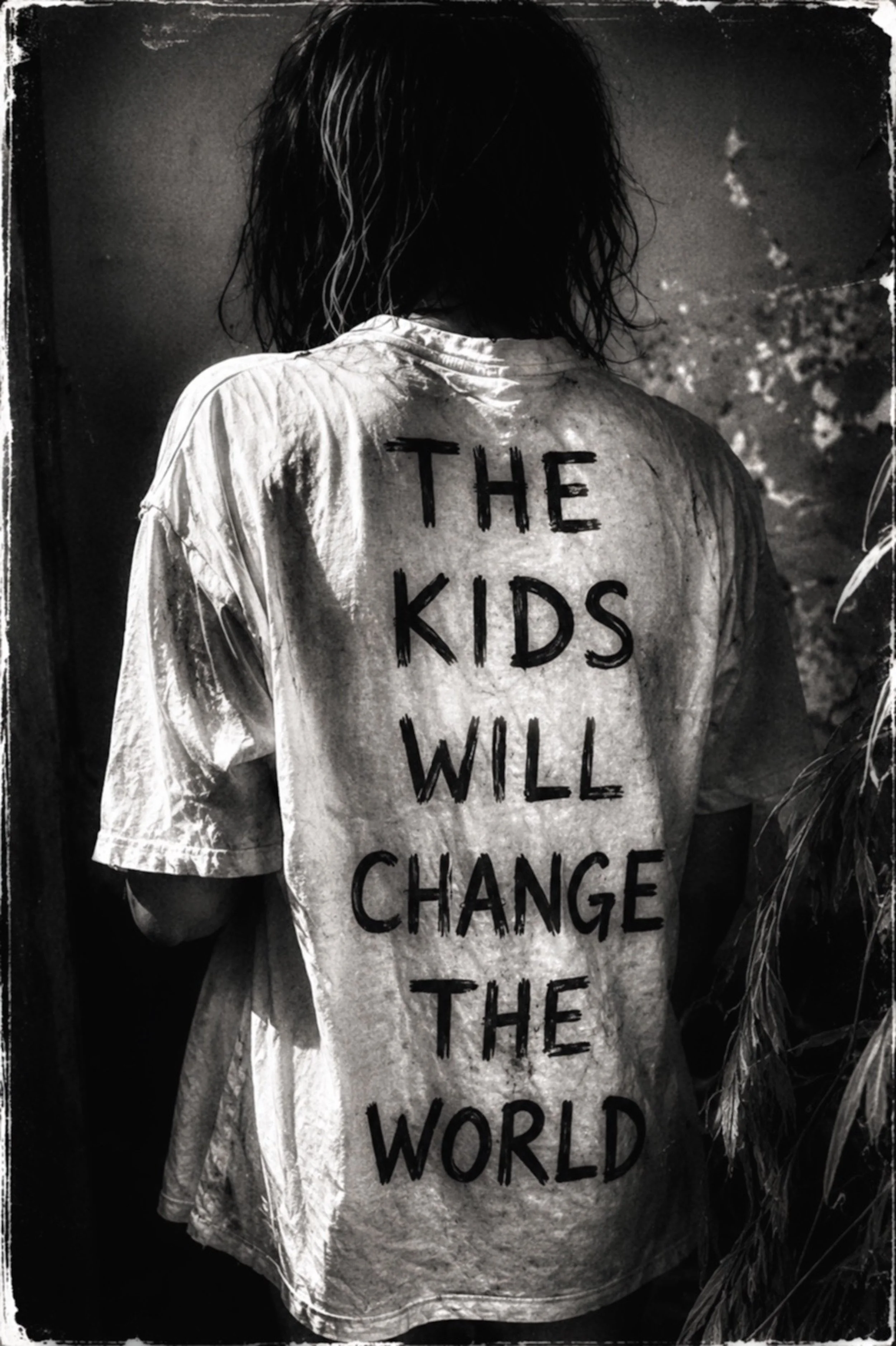
Every generation inherits something, reshapes it, questions it, and passes it forward again (© Edie Lou Freisinger)
Perhaps this is why contemporary society appears increasingly labyrinthine. Contemporary society has become psychologically and culturally complex to navigate - the traditional boundaries between youth and adulthood no longer feel clear. Culture became labyrinthine - internally contradictory, looping, and difficult to fully resolve. Postwar youth culture gradually transformed youth from a temporary stage of life into the primary symbolic language of freedom, individuality, and rebellion. Once these values became culturally attached to youth itself, adulthood increasingly lost a clear positive definition of its own. As a result, contemporary societies entered a cultural paradox in which people remaining emotionally, aesthetically, and psychologically attached to symbols associated with youth because youth itself became linked to experiences of intellectual independence, moral reflection, and existential possibility - the feeling that you can become otherwise. Of course, this is not for everyone - it does not produce a single unified cultural response. But even individuals who embrace more traditional forms of adulthood still remain culturally attached to youthfulness itself, as reflected in the enormous social and economic omnipresence of beauty, wellness, fitness, and anti-aging culture across contemporary society. However, many individuals still embrace more traditional forms of adulthood centered on family structures while others remain strongly connected to the emotional and symbolic language of youth culture throughout their lives. The ambiguity and complexity emerge from the fact that contemporary societies no longer operate through the rigid and predetermined structures that shaped earlier models of adulthood, yet they have not fully established new stable cultural definitions to replace them. Contemporary individuals are therefore required to navigate a far more open and psychologically complex social landscape in which identity, adulthood, morality, selfhood, and social roles are increasingly shaped through individual reflection rather than unquestioned conformity to inherited roles. This transformation can create contradiction and uncertainty, yet it also reflects an important historical expansion of personal freedom and intellectual autonomy. The weakening of rigid authority structures allowed larger numbers of individuals to construct identities based not simply on obedience to social expectation, but on self-examination, moral reflection and independent thought. The contemporary cultural labyrinth is difficult to navigate - today’s society is still undergoing a profound historical transition. Earlier structures surrounding authority, morality, and identity had developed over centuries and appeared stable largely because they remained culturally unquestioned for long periods of time. The postwar transformation disrupted many of these inherited structures within only a few decades, creating a society that became far more open, individualistic, and psychologically self-reflective, yet also less fixed and predictable.
So, society is still imperfect, messy, contradictory - obviously - but so many of the freedoms shaping contemporary life exist because earlier generations refused to accept the rigid systems that had dominated society for centuries. For me, as a woman especially, it is impossible not to feel the weight of that inheritance. The ability to choose how I live, think, dress, create, work, speak, or define myself did not simply appear naturally with modernity. It emerged through a cultural shift fought for by people who challenged authority, conformity, repression, and predetermined social roles long before those freedoms became normalized. The possibility of becoming who I am now rather than automatically disappearing into expectation, the freedom to think independently, question systems, reject inherited conformity, and live aesthetically and intellectually on one’s own terms are not historically neutral conditions. They are the result of generations who insisted that individuality, freedom, and moral reflection mattered. The music, the subcultures, rock’n’roll, punk, artistic communities, feminist struggles, and the broader youth movements of the postwar decades represent far more than nostalgia or style alone - although, of course, I do absolutely die for the style too. Thank you Edie Sedgwick, Marlon Brando, Patti Smith, Vivienne Westwood, Lou Reed for being forever and timelessly cool. But yeah, they created cultural spaces in which larger numbers of people could begin constructing identity beyond rigid inherited structures. Contemporary society may remain psychologically and culturally unresolved, but perhaps that complexity is also the price of freedom itself. Life feels labyrinthine and we are still collectively learning how to navigate inside a world no longer entirely organized through rigid inherited roles and unquestioned authority. And honestly, despite the contradictions, I am grateful to exist inside that transition. I am grateful to belong to a historical moment shaped by those earlier ruptures, and especially grateful to the generations who pushed those boundaries in the first place. The ability to reflect critically, think independently, question systems rather than automatically obey them, and pursue individuality without immediate erasure by rigid conformity may ultimately be the most important inheritance postwar youth culture left behind. And obviously, we need youth culture - it remains important. It keeps societies from becoming psychologically frozen. Every younger generation questions inherited norms, pushes cultural boundaries, and imagines different ways of living that older structures often cannot fully understand. Without this movement, societies risk becoming rigid, stagnant, and trapped within inherited systems. Society is dynamic - it evolves constantly. Without earlier youth movements, today’s movements would not exist. Every generation inherits something, reshapes it, questions it, and passes it forward again. We need each other in order to evolve collectively, which is why gen-hate ultimately makes no sense. Instead of rejection we should focus on preserving curiosity, imagination, openness, courage, and ethical awareness, music, and symbolic spirit that continue keeping both individuals and societies alive.
https://monoskop.org/images/e/e2/Arendt_Hannah_The_Human_Condition_2nd_1998.pdf
https://www.academia.edu/100492279/Andy_Furlong_Youth_Studies_An_Introduction
https://www.museumofyouthculture.com/teen-intro-three/
https://www.goodreads.com/book/show/1969435.Youth_And_History
https://www.goodreads.com/en/book/show/652609.Teenage
https://monoskop.org/images/d/de/Baudrillard_Jean_The_consumer_society_myths_and_structures_1970.pdf
https://www.goodreads.com/en/book/show/168787.Liquid_Modernity
https://www.goodreads.com/book/show/471199.Comparative_Youth_Culture
https://monoskop.org/images/e/e8/Debord_Guy_Society_of_the_Spectacle_1995.pdf
https://www.erikclabaugh.com/wp-content/uploads/2014/08/181899847-Subculture.pdf
https://www.goodreads.com/en/book/show/29658.Postwar
https://www.goodreads.com/en/book/show/585681.The_Sixties
https://www.goodreads.com/book/show/349650.One_Dimensional_Man
https://www.goodreads.com/en/book/show/9871927-revolt-into-style
https://www.goodreads.com/book/show/855596
https://www.goodreads.com/book/show/7216485-glamour
https://www.goodreads.com/en/book/show/151233.Weimar_Culture
https://www.goodreads.com/book/show/128891.Sophie_Scholl_and_the_White_Rose
https://www.goodreads.com/en/book/show/676723.Obedience_to_Authority